On this page
- How the Numbers Work in the Grid
- Number 1: Independence, Leadership, and New Beginnings
- Number 2: Cooperation, Sensitivity, and Relationships
- Number 3: Expression, Creativity, and Communication
- Number 4: Stability, Hard Work, and Foundation
- Number 5: Center, Balance, and Adaptability
- Numbers 6, 7, 8, and 9: Completing the Grid
- Interpreting Presence and Absence of Each Number
- A method check for The 9 Numbers of the Lo Shu Grid: Meaning and Vibration
- A question for your next reading
- A second pass through the grid context
The Lo Shu Grid is a 3×3 magic square rooted in ancient Chinese cosmology. It arranges the numbers 1 through 9 in a fixed pattern where every row, column, and diagonal sums to 15. But beyond its mathematical elegance, each number carries a distinct energy and life theme. Understanding what each number means individually is the foundation for reading any personal Lo Shu map.
How the Numbers Work in the Grid
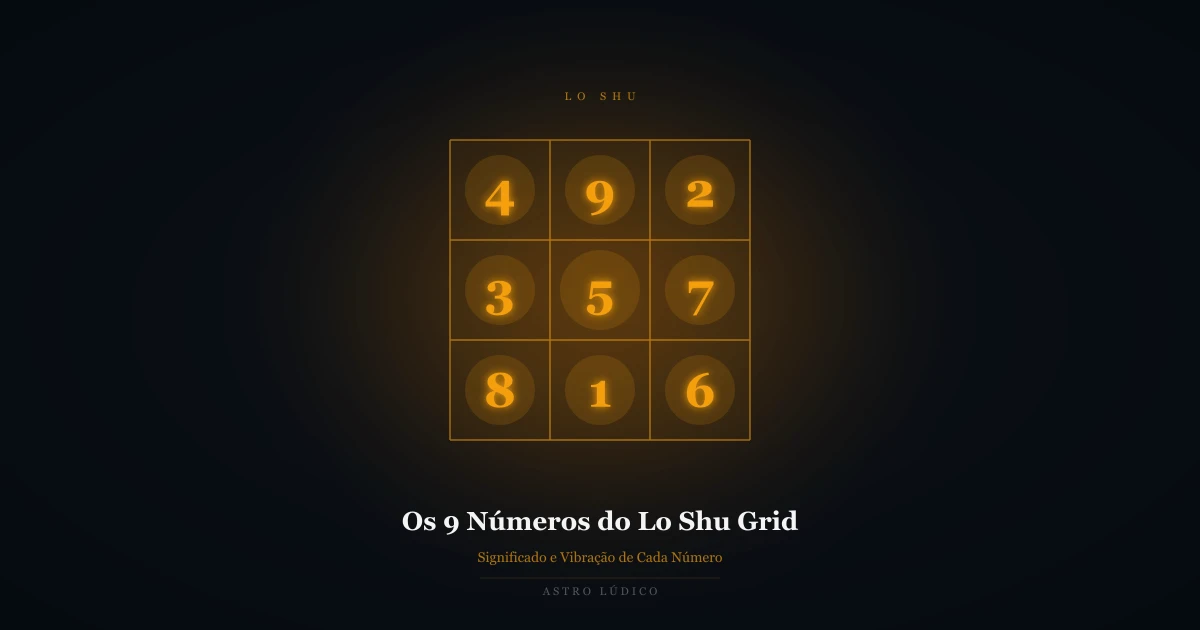
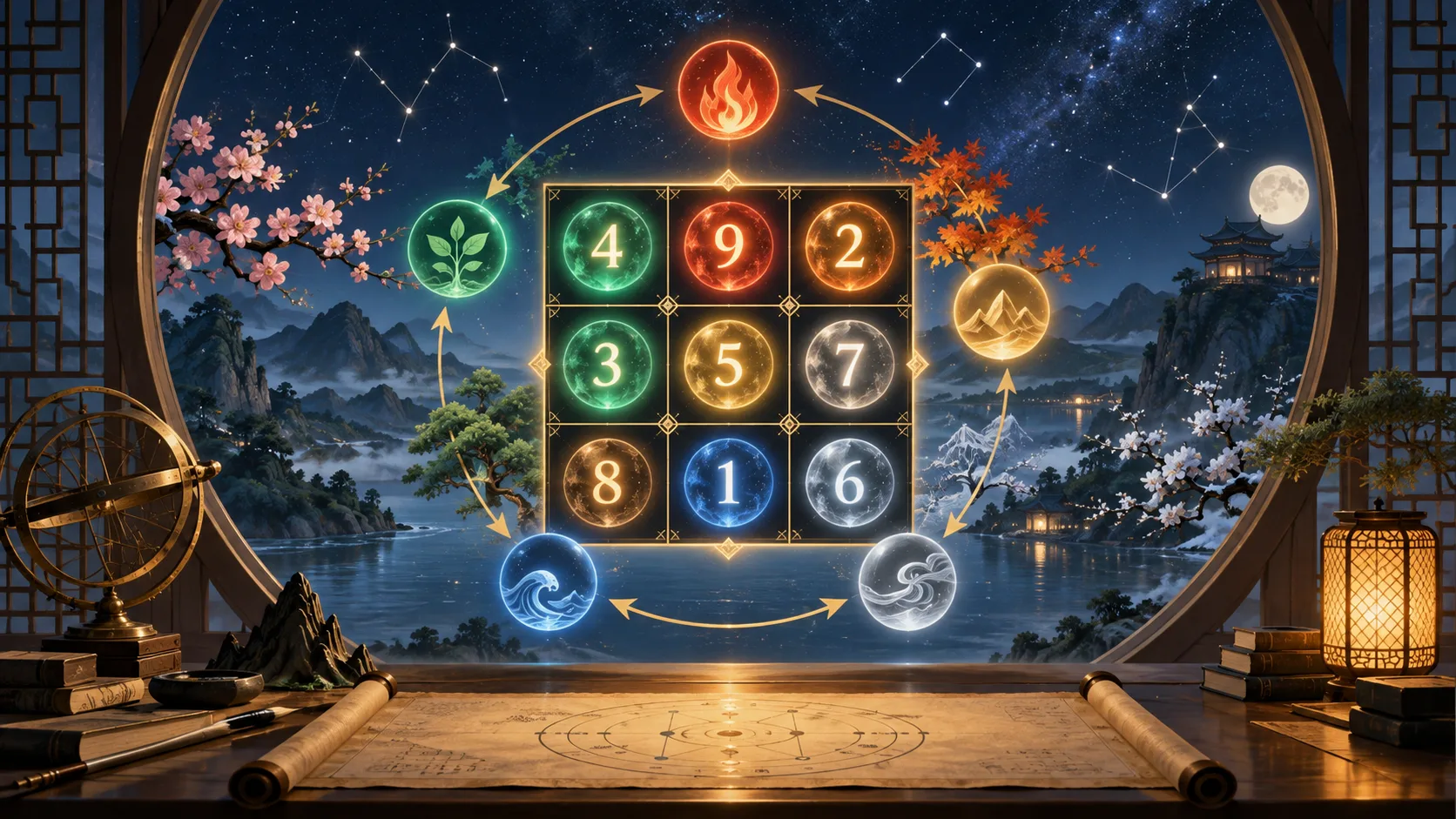
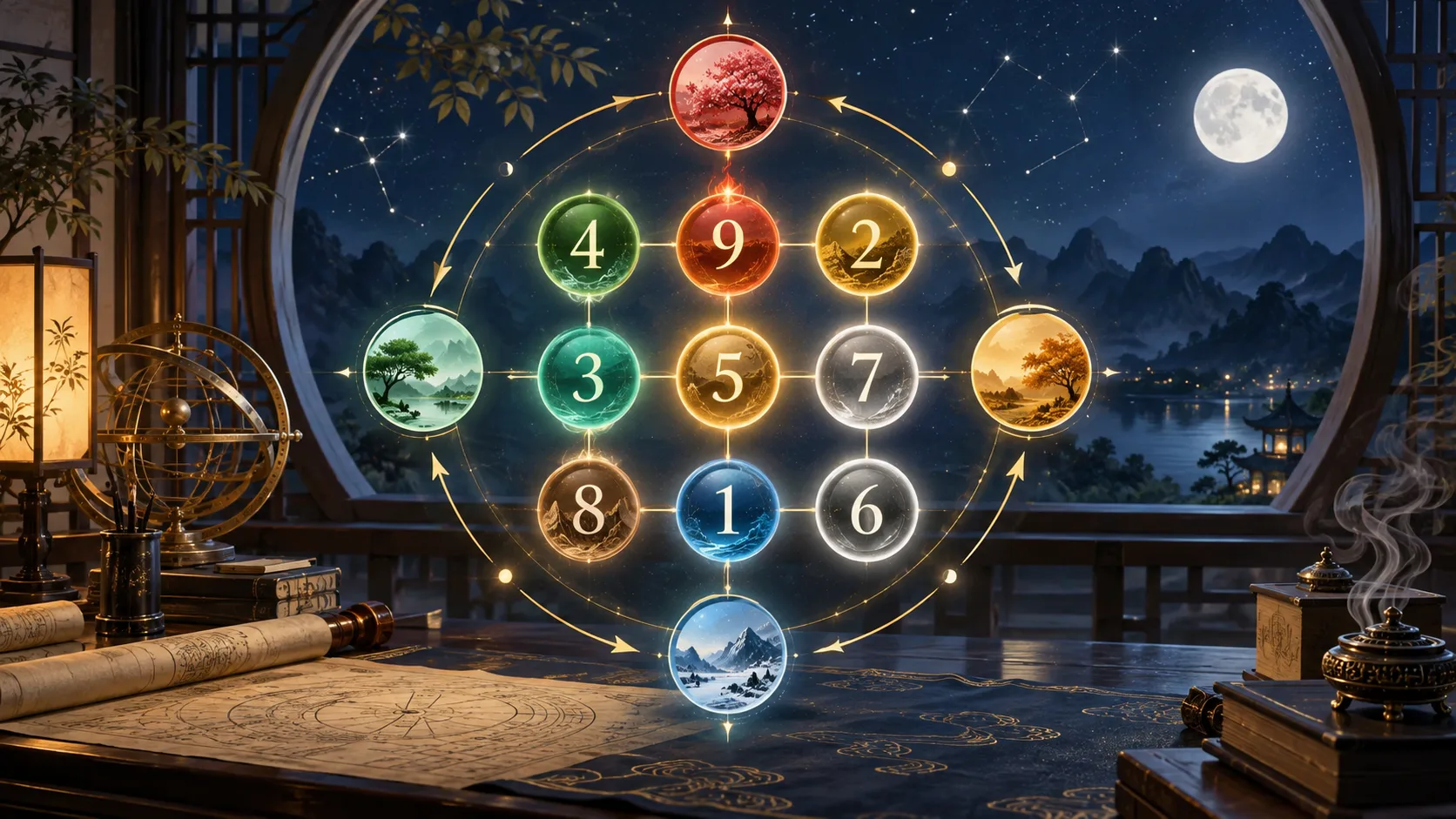
The canonical arrangement places 5 at the center, with the remaining numbers surrounding it: 4-9-2 in the top row, 3-5-7 in the middle row, and 8-1-6 in the bottom row. This layout is not random. Each position carries directional and elemental significance from Chinese metaphysics. The center (5) represents balance and the crossroads of all energies, while each outer number governs a specific domain of life. When you plot a person's birth date numbers onto this grid, the count of each digit shows how strongly that vibration operates in their life.
Number 1: Independence, Leadership, and New Beginnings
Number 1 sits in the bottom row, center column — a position associated with individuality and self-expression. It carries the energy of beginnings, initiative, and the drive to carve a unique path. People with a strong 1 in their grid tend to be self-reliant and assertive, natural pioneers who prefer to lead rather than follow. When 1 appears multiple times, that independence can become stubbornness if left unchecked. When 1 is absent, the person may struggle with self-confidence and often needs to consciously cultivate a stronger sense of personal identity.
Number 2: Cooperation, Sensitivity, and Relationships
Number 2 occupies the top-right cell of the grid, positioned along the diagonal that connects intuition with emotional depth. It governs cooperation, diplomacy, and the capacity for deep connection with others. Those with a prominent 2 are gifted listeners and natural mediators, able to sense the emotional undercurrents in any situation. When 2 appears in excess, emotional sensitivity can tip into anxiety or people-pleasing. An absent 2 may point to difficulty trusting others or challenges in expressing vulnerability.
Number 3: Expression, Creativity, and Communication
Number 3 sits in the middle-left cell, linking memory, creativity, and the spoken or written word. It channels artistic expression, humor, and the joy of sharing ideas. A strong 3 brings natural communicators who find it easy to articulate feelings and inspire others. Multiple 3s can make a person scattered or overly talkative. When 3 is missing, creative blocks or difficulty expressing emotions freely are common patterns to work through.
Number 4: Stability, Hard Work, and Foundation
Number 4 occupies the top-left cell, a position associated with practicality, perseverance, and the building of solid structures. It represents the willingness to put in sustained effort, follow systems, and create lasting results. People with a strong 4 are reliable and organized, though they can become rigid or resistant to change when this energy dominates. An absent 4 can make it harder to maintain routines, finish projects, or feel grounded in everyday responsibilities.
Number 5: Center, Balance, and Adaptability
Number 5 holds the very center of the grid, making it the most powerful position in the square. It governs balance, freedom, adaptability, and the ability to navigate change. Because all eight lines of the magic square pass through or touch the center, the energy of 5 connects and influences every other number. A strong 5 brings versatility and resilience, but excess can lead to restlessness and an inability to commit. When 5 is absent, the person may feel unmoored during periods of transition and benefits greatly from consciously cultivating inner stability.
Numbers 6, 7, 8, and 9: Completing the Grid
- Number 6 (bottom-right cell): governs responsibility, family, and nurturing. It carries the energy of care, home, and service to others. A strong 6 produces devoted protectors; in excess it can create worry or self-sacrifice. When absent, setting and maintaining healthy boundaries may be an ongoing lesson.
- Number 7 (middle-right cell): linked to spirituality, introspection, and wisdom. It favors solitude, deep study, and connection with the unseen. Multiple 7s bring philosophical depth but can also foster isolation. An absent 7 often signals a need to develop a more reflective inner life.
- Number 8 (bottom-left cell): associated with abundance, material power, and ambition. It drives practical achievement and financial success. A strong 8 builds material security; unchecked, it can become controlling or obsessed with status. When 8 is absent, the person may undervalue their own abilities or avoid positions of authority.
- Number 9 (top-center cell): represents humanitarianism, universal wisdom, and the completion of cycles. It carries a broad perspective, compassion, and the impulse to contribute to something larger than oneself. Excess 9 energy can bring idealism that loses touch with practical reality. An absent 9 may indicate difficulty seeing the bigger picture or letting go of the past.
Interpreting Presence and Absence of Each Number
In a personal Lo Shu map, each digit from your birth date is plotted onto the grid. A number that appears multiple times is amplified — its qualities and challenges are more pronounced in daily life. A number that appears once is present but balanced, operating quietly in the background. A number that is entirely absent marks an area where the person may need to invest conscious effort to develop the qualities it represents. Absence is not a flaw; it is an invitation to grow.
The richness of the Lo Shu Grid lies in reading each number not in isolation but in relationship with its neighbors, the arrows it forms, and the overall balance of the map. Each number is a thread; the grid is the full tapestry. Learning the individual vibrations is the first step toward understanding the complete picture of any personal energy map.
A method check for The 9 Numbers of the Lo Shu Grid: Meaning and Vibration
The method becomes more useful when the reader can reproduce it and see where interpretation begins. Start with the fixed 3×3 Lo Shu arrangement, place the date digits according to the project’s rules, and distinguish presence, repetition, absence, and arrows. A grid pattern is meaningful only in relation to the cells that actually contain it. For this article, keep presence, repetition, and absence as separate observations.
A small example
Mark one cell or arrow, describe what is visible, and write a practical question about habit or attention. The example demonstrates the grid grammar; it does not prove an immutable trait. In “The 9 Numbers of the Lo Shu Grid: Meaning and Vibration”, write the input and the observed result before choosing a meaning.
Keep the neighbouring concept separate
The Lo Shu Grid is not the Destiny Matrix and not a diagnosis. Five-Element language adds a traditional correspondence, not a measurement of health or character. Keep this distinction explicit while reading “The 9 Numbers of the Lo Shu Grid: Meaning and Vibration”.
Turn the result into an observation
Keep a short note for “The 9 Numbers of the Lo Shu Grid: Meaning and Vibration”: the input, the displayed position, one interpretation, and one observation from ordinary life. Revisit it after a few days and allow the observation to change the question. This simple loop protects the reader from treating a first impression as a verdict. Use “The 9 Numbers of the Lo Shu Grid: Meaning and Vibration” as a prompt, then compare it with one ordinary observation.
A question for your next reading
Which cell or arrow is actually present, what ordinary behaviour could illustrate it, and what information is missing from the grid? If the prompt creates fear, pressure, or a consequential decision, pause and use ordinary evidence and qualified support. For “The 9 Numbers of the Lo Shu Grid: Meaning and Vibration”, let the next question be about presence, repetition, and absence as separate observations.
Before closing the reading, check:
- canonical cell placement
- presence and absence described separately
- symbolic prompt checked against habit
Share a Lo Shu reading with care
When you share “The 9 Numbers of the Lo Shu Grid: Meaning and Vibration”, explain which input and position produced the reading. Point to one observable detail from the article—the cells, repetitions, absences, or arrows actually present—and leave room for another person to disagree. A symbolic result can open a conversation, but it cannot label a partner, promise a financial outcome, or replace qualified advice.
A second pass through the grid context
Return to “The 9 Numbers of the Lo Shu Grid: Meaning and Vibration” and compare the first impression with the canonical grid, a daily habit, and the limits of the correspondence.
On a second pass through “The 9 Numbers of the Lo Shu Grid: Meaning and Vibration”, compare the interpretation with the canonical grid, a daily habit, and the limits of the correspondence. If lived evidence points elsewhere, keep the observation and revise the question. That is a more honest use of a symbolic method than forcing the chart to deliver a verdict.
Did this guide help you?
Astro Ludico is an independent project. Your support helps us create more free tools and educational content.

About the Author: Kelwin Felipe
Creator of Astro Lúdico, software developer and independent researcher in Cabalistic Numerology, dedicated to translating ancestral wisdom into practical and intuitive tools for self-knowledge.
Content graph
The pillar guide for this theme
Build the broader context before exploring this focused article.
Lo Shu Grid: Introduction to the 4,000-Year-Old Magic Square
Read first
Helpful foundations
These articles establish the concepts used here.
From study to practice
Put this into practice
Explore the related interactive tool: Lo Shu Grid.
Continue the path
Next in this study path
Move forward through the sequence selected by the editorial graph.
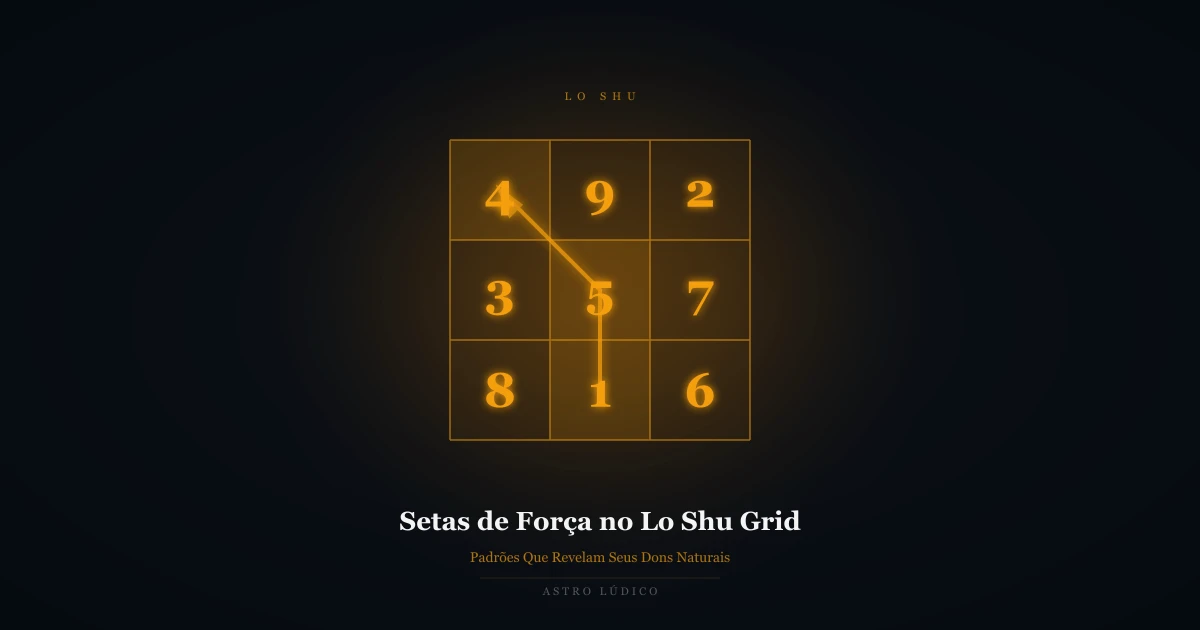
Force Arrows in the Lo Shu Grid
Discover how Force Arrows reveal your natural gifts and dominant traits through the patterns formed when three aligned cells are all present in your Lo Shu Grid.
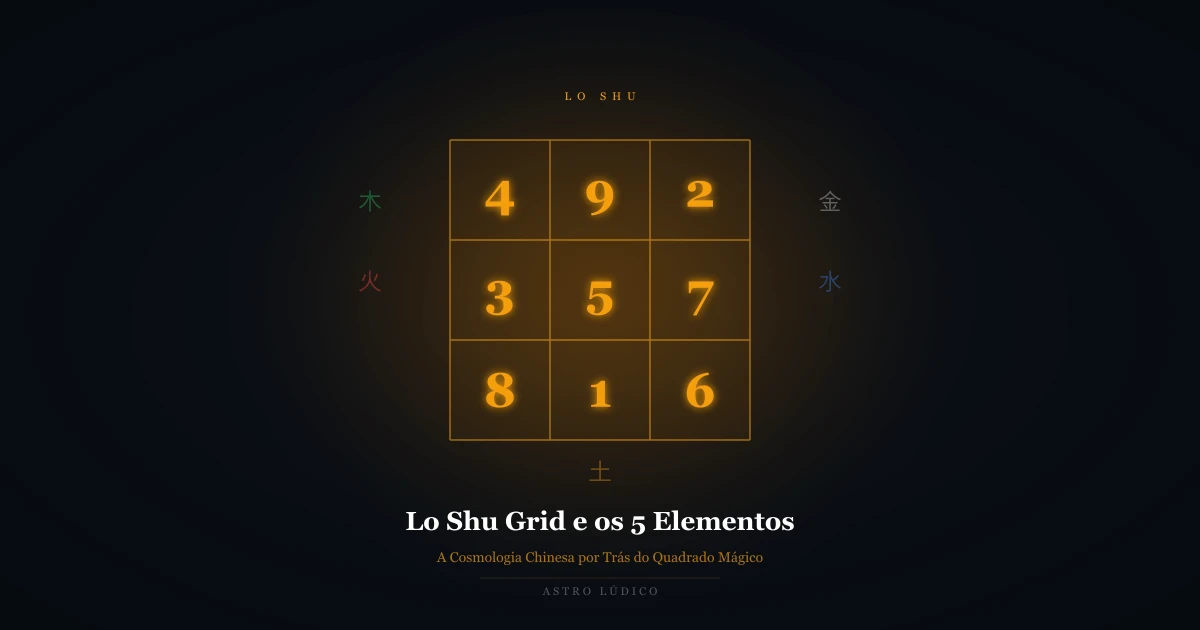
Lo Shu Grid and the Five Elements: How Chinese Cosmology Lives in Your Numbers
Discover how Wood, Fire, Earth, Metal, and Water connect to the nine numbers of the Lo Shu Grid, and learn to read elemental balance and imbalance in your personal map.
Keep exploring
Related studies
Explore adjacent questions selected for this article.
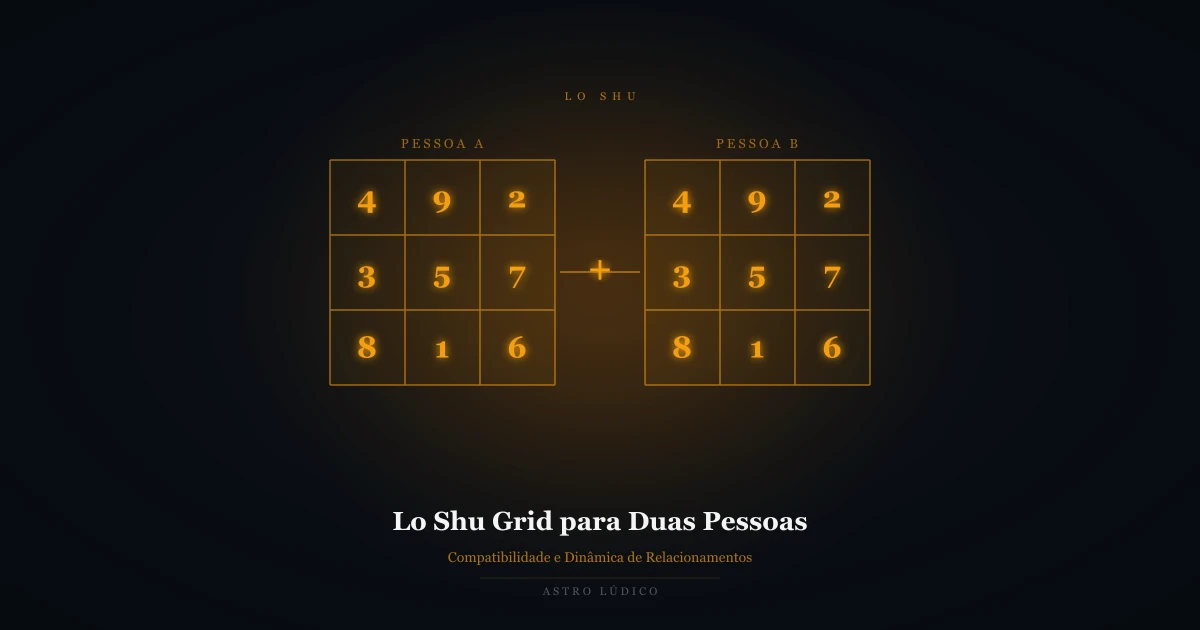
Lo Shu Grid: Reading Two People's Maps Side by Side
Learn how to compare two Lo Shu Grids to understand complementarity, shared themes, and tension points between two people — whether in love, friendship, or professional partnership.
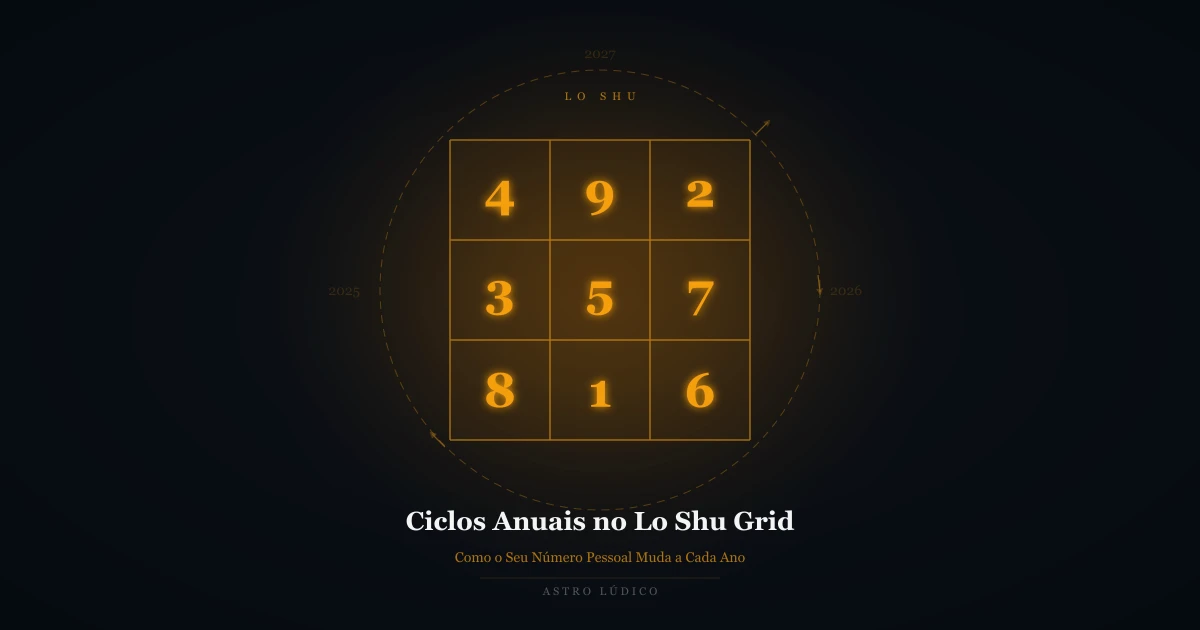
Annual Cycles in the Lo Shu Grid
Discover how your Personal Year Number changes every year and how each of the nine cycles shapes your decisions, relationships, and personal growth.
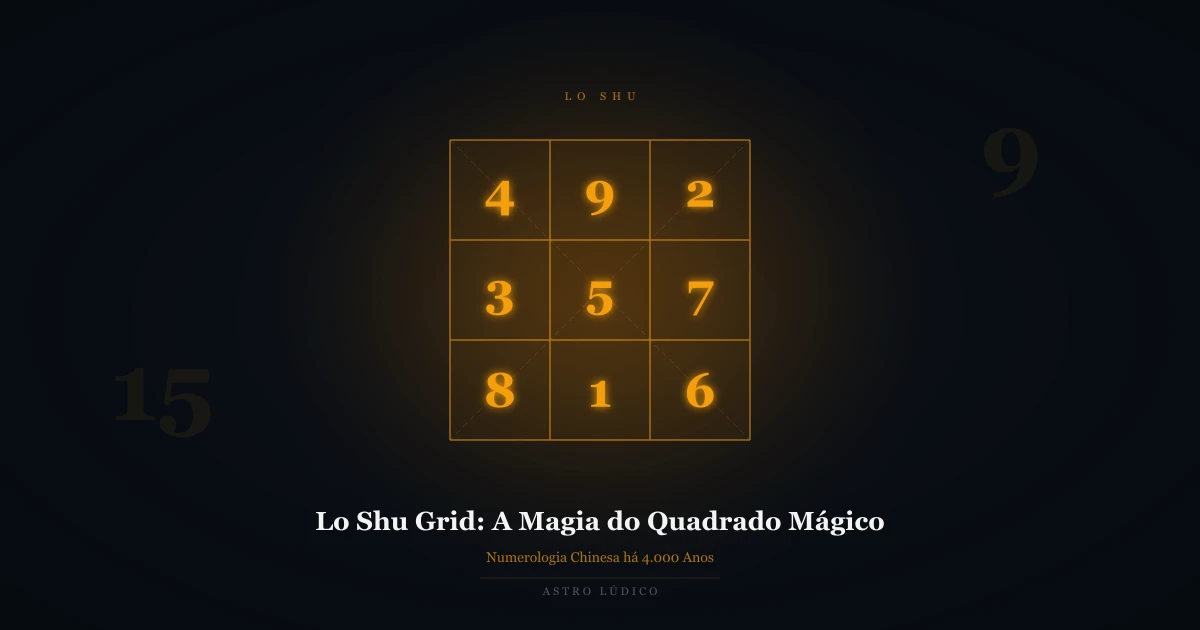
Lo Shu Grid: Introduction to the 4,000-Year-Old Magic Square
Discover the Lo Shu Grid, an ancient Chinese magic square where every row, column, and diagonal sums to 15. Learn how to map your birth date onto the grid and interpret your personal strengths and development areas.