On this page
- Historical Origin: Wu of Hsia and the Sacred Tortoise
- The Magic Square: Layout and Mathematical Property
- How to Plot Your Birth Date on the Grid
- Interpreting Your Personal Grid
- Arrows of Strength and Arrows of Weakness
- A method check for Lo Shu Grid: Introduction to the 4,000-Year-Old Magic Square
- A question for your next reading
- A second pass through the grid context
Imagine a simple 3×3 grid that has fascinated mathematicians, philosophers, and spiritual seekers for four millennia. The Lo Shu Grid is not just a curiosity — it is one of the oldest numerological tools in human history, and it offers a traditional way to organize the digits in a birth date for reflection. By the end of this article, you will be able to draw your own grid, identify which numbers are present or absent, and compare the pattern with questions about habits and attention, without treating it as a personality or life-path verdict.
Historical Origin: Wu of Hsia and the Sacred Tortoise
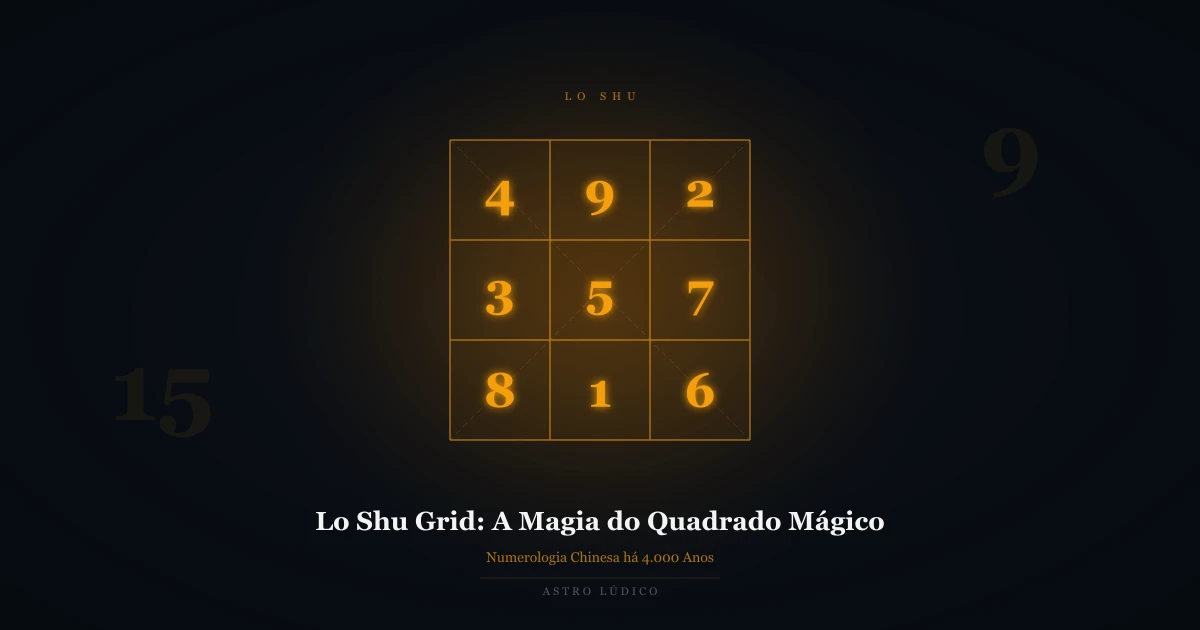
According to Chinese tradition, roughly 4,000 years ago the legendary Emperor Wu of Hsia was standing by the banks of the Lo River when a tortoise emerged from the water. On its shell was a pattern of dots arranged in a perfect 3×3 grid — a pattern so mathematically elegant that it has been studied ever since. Each group of dots represented a number from 1 to 9, and when ancient scholars examined the arrangement, they discovered that every row, every column, and both main diagonals added up to exactly the same total: 15. This discovery was seen as a divine message encoded in nature, and the grid was named Lo Shu — literally 'Lo River Writing.'
The Magic Square: Layout and Mathematical Property
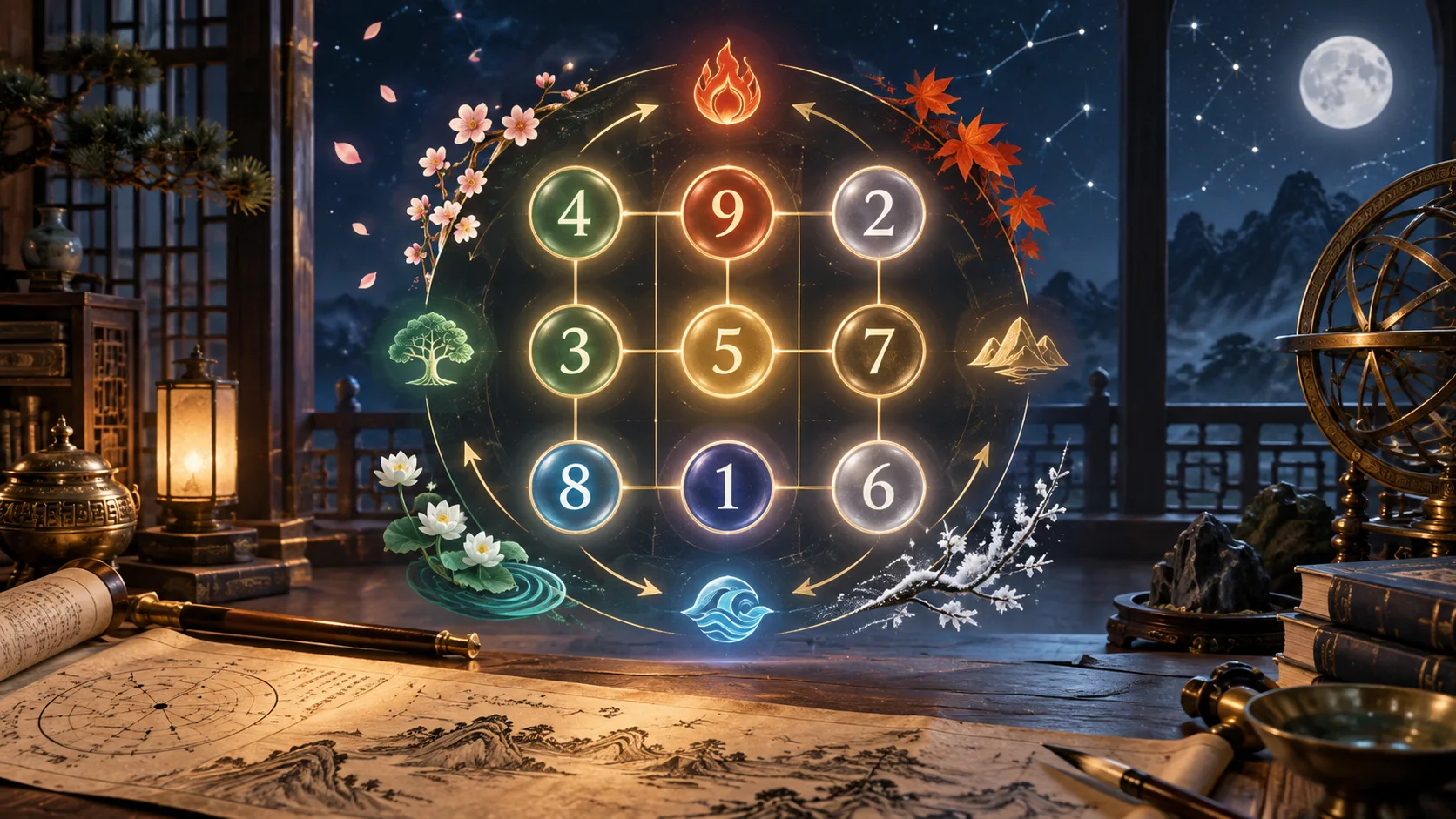
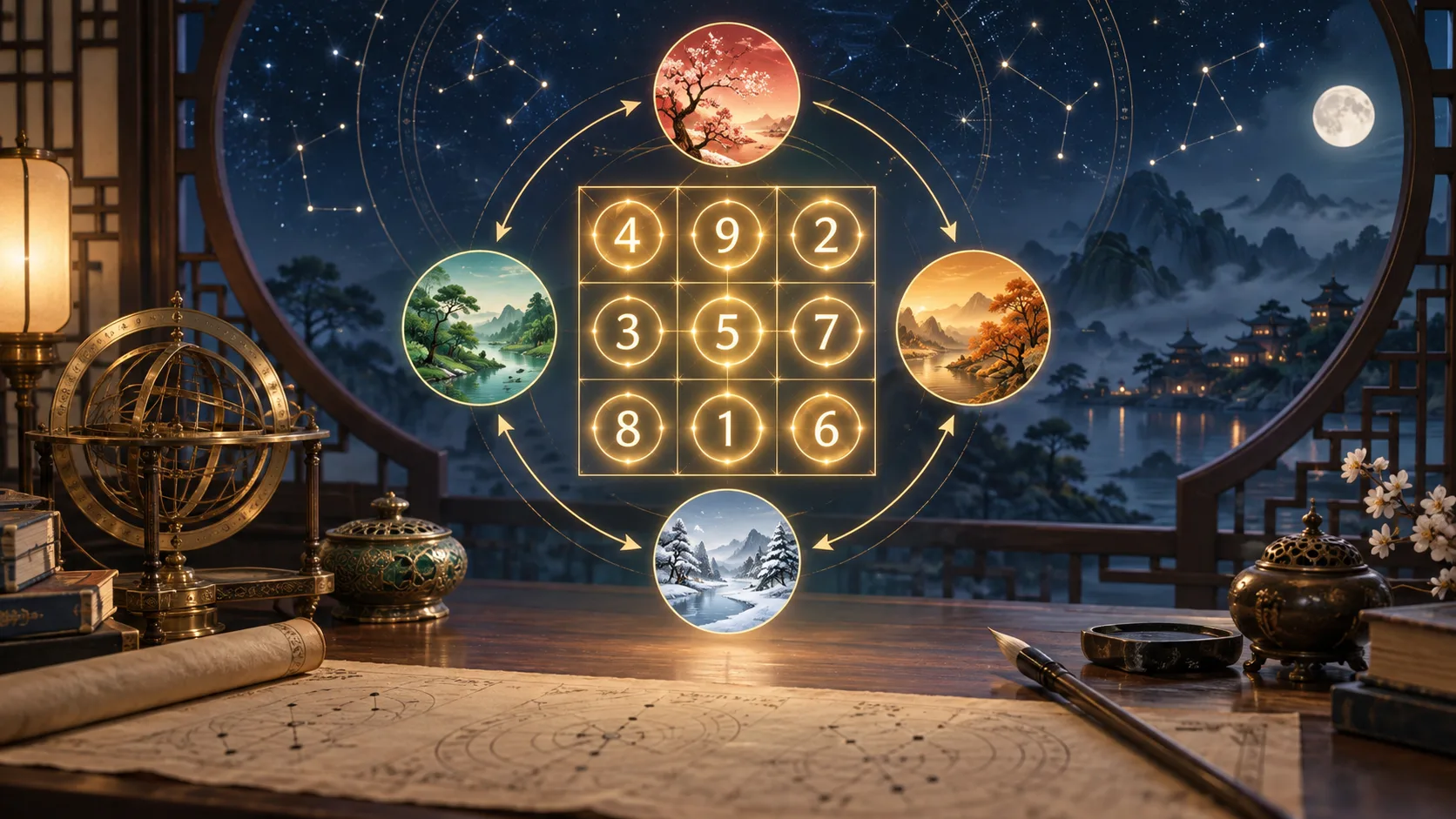
The canonical Lo Shu arrangement places the nine numbers in the following positions (reading left to right, top to bottom): the top row holds 4, 9, and 2; the middle row holds 3, 5, and 7; the bottom row holds 8, 1, and 6. The number 5 sits at the center, acting as the pivot of the entire structure. Verify any line you choose and you will always reach 15: 4+9+2=15, 3+5+7=15, 8+1+6=15 across the rows; 4+3+8=15, 9+5+1=15, 2+7+6=15 down the columns; and 4+5+6=15, 2+5+8=15 along the two main diagonals. This property — every line summing to the same number — is the defining characteristic of a magic square, and the Lo Shu is the only 3×3 magic square that exists (rotations and reflections aside).
How to Plot Your Birth Date on the Grid
The Digit Mapper method translates any birth date into a personal Lo Shu Grid in three simple steps. First, write your full birth date in DD/MM/YYYY format and remove the separators, leaving only the eight digit characters. Second, go through each digit one at a time: if the digit is zero, skip it; if it is between 1 and 9, mark one occurrence of that digit in the corresponding cell on the grid. Third, count how many times each digit appears — that count tells you how strongly that number is represented in your map. A cell with two or three marks indicates a strong, recurring energy; a cell with no marks indicates an absent number.
Worked example — birth date 15/08/1990: removing the slashes gives the digit string 15081990. Walking through each character: 1 appears in the string at positions 1 and 7 (count: 2); 5 appears once (count: 1); 0 is skipped; 8 appears once (count: 1); 9 appears once (count: 1); the second 0 is skipped. The resulting occupancy map is: cell 1 → 2 marks, cell 5 → 1 mark, cell 8 → 1 mark, cell 9 → 1 mark. Cells 2, 3, 4, 6, and 7 are empty for this birth date.
Interpreting Your Personal Grid
Once you have plotted all the digits from your birth date, the reading divides naturally into two categories. Numbers that appear once or more are called present numbers and are traditionally associated with themes that may feel familiar; the grid does not establish a fixed personality. Numbers that appear multiple times amplify that theme: a double or triple occurrence of any digit can be a prompt to observe a recurring tendency, not proof of a dominant trait. Numbers that are completely absent are called missing numbers and point to areas where growth and learning are the central themes of your life. Rather than seeing missing numbers as deficiencies, the Lo Shu tradition views them as invitations — the soul has chosen to develop those qualities precisely because they do not come automatically.
Arrows of Strength and Arrows of Weakness
Beyond individual numbers, the Lo Shu Grid reveals larger patterns called Arrows. An Arrow of Strength forms when all three cells in a complete row, column, or diagonal are occupied by at least one digit. An Arrow of Weakness forms when all three cells in a complete row, column, or diagonal are entirely empty. Arrows are traditionally used to discuss themes of attention and practice; they do not measure personality.
- Arrow of Determination (1–5–9, main diagonal): present in people with strong willpower, clear goals, and persistent drive. They rarely give up and often inspire others through sheer resolve.
- Arrow of Intellect (3–5–7, middle row): associated with sharp analytical thinking, love of learning, and the ability to process information quickly and accurately.
- Arrow of Compassion (2–5–8, anti-diagonal): marks individuals with deep empathy, sensitivity to others' needs, and a natural gift for supportive and nurturing roles.
- Arrow of Practicality (1–2–3, left column): people with this arrow are grounded, methodical, and skilled at turning abstract ideas into concrete plans.
- Arrow of Spirituality (7–8–9, top row): connected to intuition, philosophical thinking, and an innate interest in the deeper meaning behind events.
- Arrow of Frustration (4–9–2 empty, top row): when all three top-row cells are absent, the person may struggle with impulsive reactions and find it hard to slow down before acting.
- Arrow of Resignation (1–5–9 empty, main diagonal): when all three diagonal cells are missing, self-doubt and a tendency to abandon goals before completion can be recurring challenges.
- Arrow of Sensitivity (2–5–8 empty, anti-diagonal): when this diagonal is empty, the person may feel emotions intensely without a reliable outlet, leading to heightened vulnerability to criticism.
Most people will have a mix of present and absent arrows. The Lo Shu system encourages you to work consciously with the Arrows of Weakness — not to overcome them by force, but to develop the qualities they represent through intentional practice and self-awareness. Over time, working with an absent arrow can become a useful practice precisely because it invites deliberate attention.
A method check for Lo Shu Grid: Introduction to the 4,000-Year-Old Magic Square
The method becomes more useful when the reader can reproduce it and see where interpretation begins. Start with the fixed 3×3 Lo Shu arrangement, place the date digits according to the project’s rules, and distinguish presence, repetition, absence, and arrows. A grid pattern is meaningful only in relation to the cells that actually contain it. For this article, keep the fixed 3×3 placement before reading presence or absence.
A small example
Mark one cell or arrow, describe what is visible, and write a practical question about habit or attention. The example demonstrates the grid grammar; it does not prove an immutable trait. In “Lo Shu Grid: Introduction to the 4,000-Year-Old Magic Square”, write the input and the observed result before choosing a meaning.
Keep the neighbouring concept separate
The Lo Shu Grid is not the Destiny Matrix and not a diagnosis. Five-Element language adds a traditional correspondence, not a measurement of health or character. Keep this distinction explicit while reading “Lo Shu Grid: Introduction to the 4,000-Year-Old Magic Square”.
Turn the result into an observation
Keep a short note for “Lo Shu Grid: Introduction to the 4,000-Year-Old Magic Square”: the input, the displayed position, one interpretation, and one observation from ordinary life. Revisit it after a few days and allow the observation to change the question. This simple loop protects the reader from treating a first impression as a verdict. Use “Lo Shu Grid: Introduction to the 4,000-Year-Old Magic Square” as a prompt, then compare it with one ordinary observation.
A question for your next reading
Which cell or arrow is actually present, what ordinary behaviour could illustrate it, and what information is missing from the grid? If the prompt creates fear, pressure, or a consequential decision, pause and use ordinary evidence and qualified support. For “Lo Shu Grid: Introduction to the 4,000-Year-Old Magic Square”, let the next question be about the fixed 3×3 placement before reading presence or absence.
Before closing the reading, check:
- canonical cell placement
- presence and absence described separately
- symbolic prompt checked against habit
Share a Lo Shu reading with care
When you share “Lo Shu Grid: Introduction to the 4,000-Year-Old Magic Square”, explain which input and position produced the reading. Point to one observable detail from the article—the cells, repetitions, absences, or arrows actually present—and leave room for another person to disagree. A symbolic result can open a conversation, but it cannot label a partner, promise a financial outcome, or replace qualified advice.
A second pass through the grid context
Return to “Lo Shu Grid: Introduction to the 4,000-Year-Old Magic Square” and compare the first impression with the canonical grid, a daily habit, and the limits of the correspondence.
On a second pass through “Lo Shu Grid: Introduction to the 4,000-Year-Old Magic Square”, compare the interpretation with the canonical grid, a daily habit, and the limits of the correspondence. If lived evidence points elsewhere, keep the observation and revise the question. That is a more honest use of a symbolic method than forcing the chart to deliver a verdict.
Did this guide help you?
Astro Ludico is an independent project. Your support helps us create more free tools and educational content.

About the Author: Kelwin Felipe
Creator of Astro Lúdico, software developer and independent researcher in Cabalistic Numerology, dedicated to translating ancestral wisdom into practical and intuitive tools for self-knowledge.
From study to practice
Put this into practice
Explore the related interactive tool: Lo Shu Grid.
Continue the path
Next in this study path
Move forward through the sequence selected by the editorial graph.
The 9 Numbers of the Lo Shu Grid: Meaning and Vibration
Discover the individual meaning and vibration of each of the 9 numbers in the Lo Shu Grid, how their position shapes the reading, and how their presence or absence can become a reflection prompt.
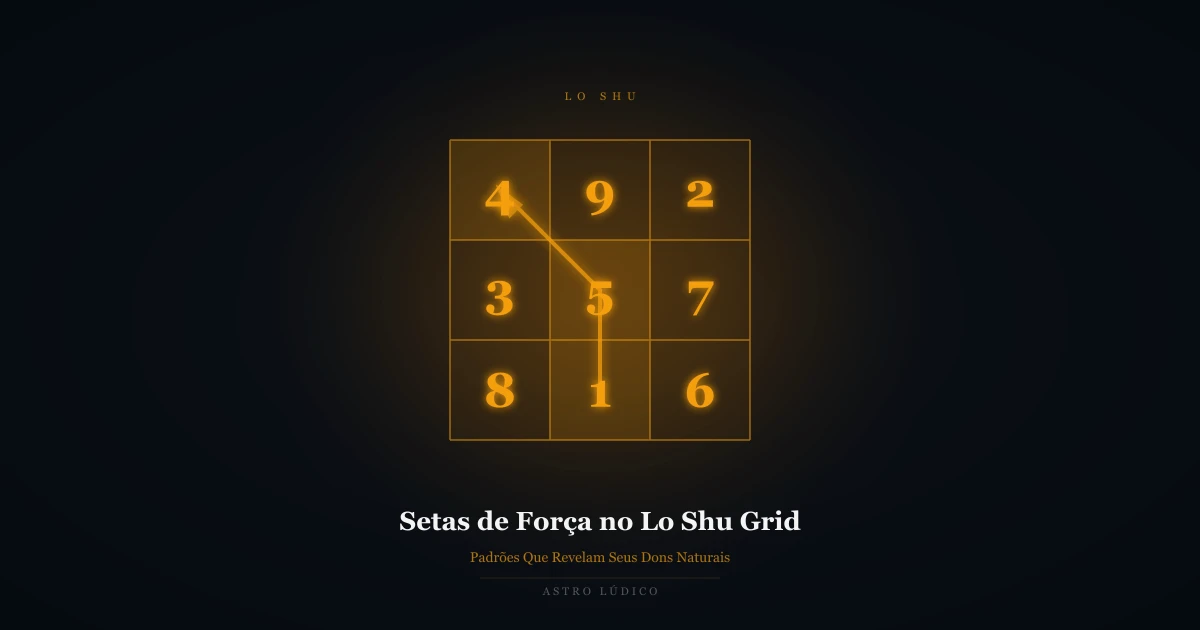
Force Arrows in the Lo Shu Grid
Discover how Force Arrows reveal your natural gifts and dominant traits through the patterns formed when three aligned cells are all present in your Lo Shu Grid.
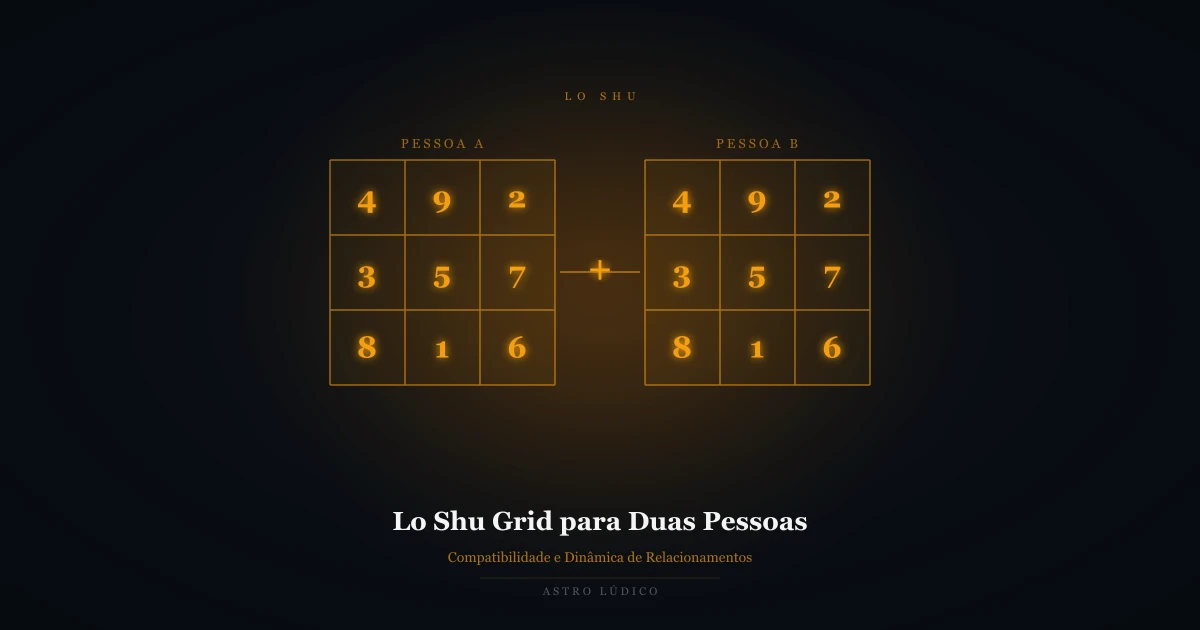
Lo Shu Grid: Reading Two People's Maps Side by Side
Learn how to compare two Lo Shu Grids to understand complementarity, shared themes, and tension points between two people — whether in love, friendship, or professional partnership.
Keep exploring
Related studies
Explore adjacent questions selected for this article.
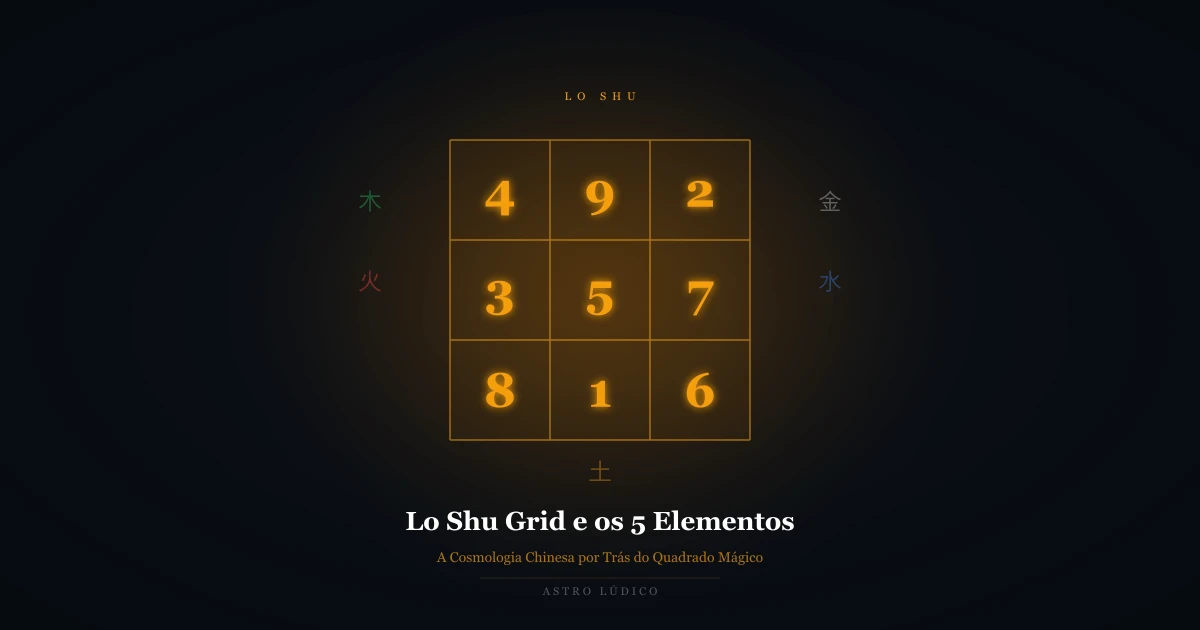
Lo Shu Grid and the Five Elements: How Chinese Cosmology Lives in Your Numbers
Discover how Wood, Fire, Earth, Metal, and Water connect to the nine numbers of the Lo Shu Grid, and learn to read elemental balance and imbalance in your personal map.
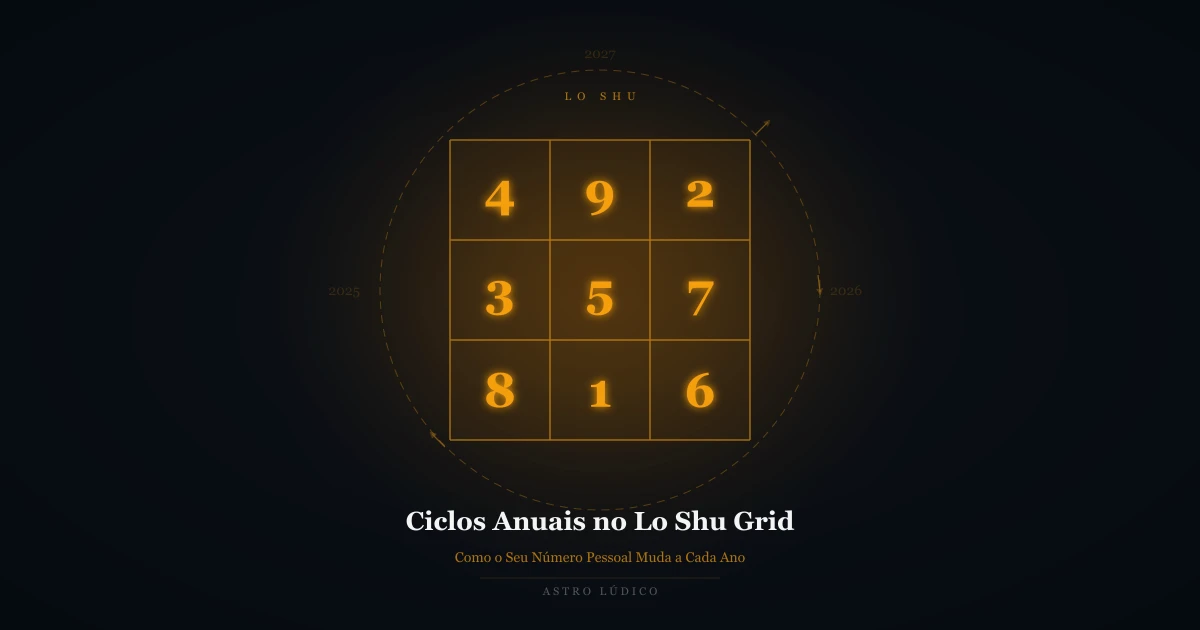
Annual Cycles in the Lo Shu Grid
Discover how your Personal Year Number changes every year and how each of the nine cycles shapes your decisions, relationships, and personal growth.