On this page
- How to Build Both Individual Grids
- Complementary Numbers: When One Has What the Other Lacks
- Shared Numbers: Common Themes, Values, and Mutual Interests
- Complementary Arrows Between the Two Maps
- Practical Example: Dates 15/08/1990 and 22/03/1985
- Tension Dynamics: When Both Share the Same Missing Number
- Practical Applications: Couple, Friendship, and Professional Partnership
- A method check for Lo Shu Grid: Reading Two People's Maps Side by Side
- What can the pair observe next?
- A second pass through the grid context
Reading one person's Lo Shu Grid is already revealing. Reading two grids side by side opens a completely different conversation. When you place both maps together, you stop asking 'who is this person?' and start asking 'what happens between these two people?' The numbers present in one grid and absent in the other, the arrows that form in one but not the other, the cells both share — all of these details sketch a living picture of the dynamic between two individuals.
How to Build Both Individual Grids
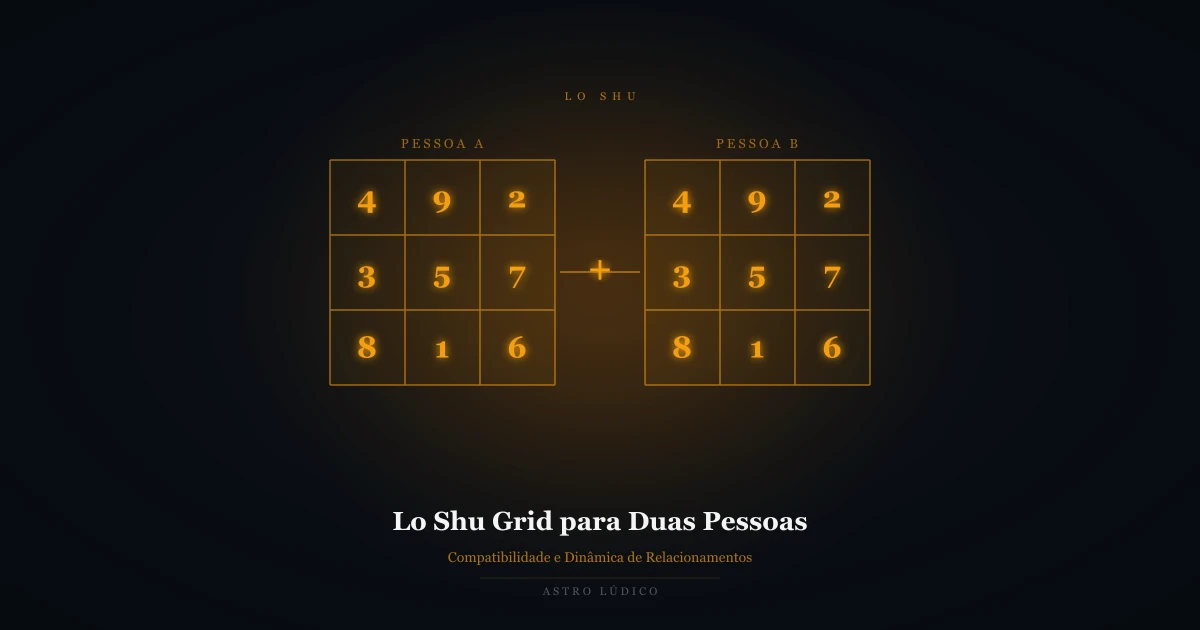
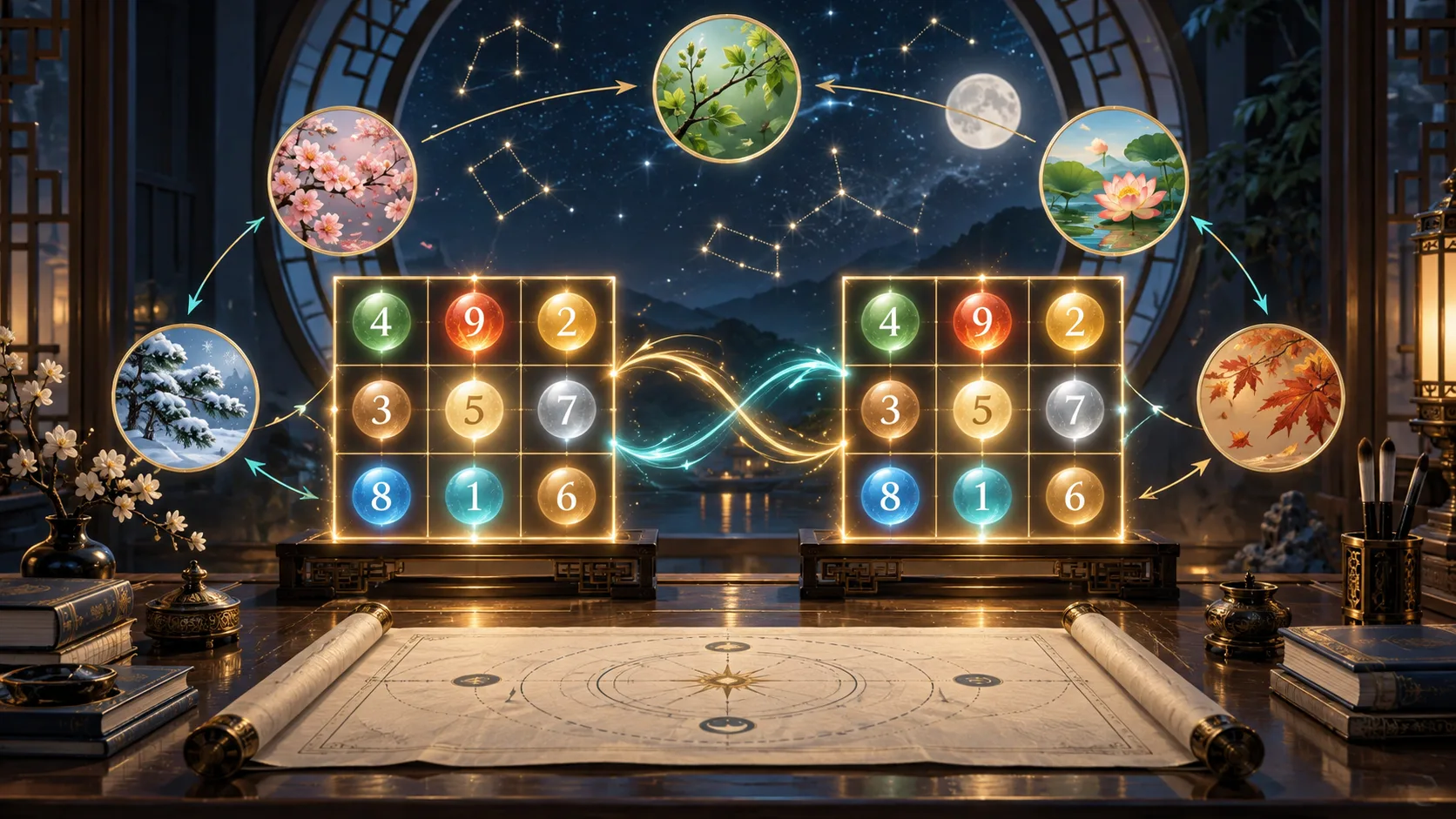
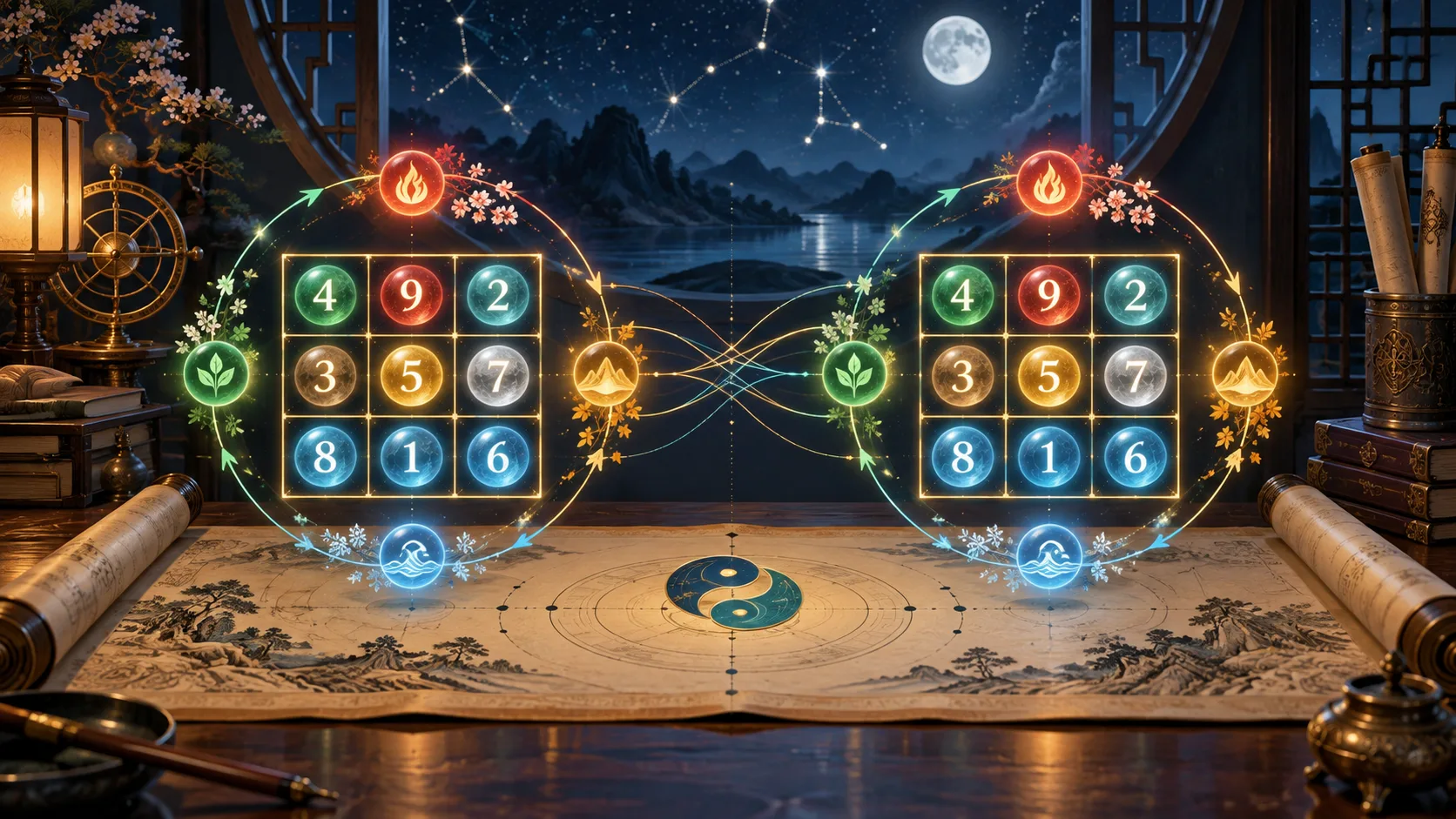
The starting point is the birth date in DD/MM/YYYY format. Write out all eight digits, remove any zeros, and place each remaining digit in its corresponding cell on the 3×3 grid. The fixed layout is: 4 in the top-left, 9 in the top-center, 2 in the top-right, 3 in the middle-left, 5 in the center, 7 in the middle-right, 8 in the bottom-left, 1 in the bottom-center, and 6 in the bottom-right. Each digit from the birth date appears in the cell that carries that number, and the same digit can appear multiple times if it repeats in the date.
Complementary Numbers: When One Has What the Other Lacks
A missing number in a Lo Shu Grid usually points to an underdeveloped quality or a theme that can be observed and worked on. When the second person has that very number present — especially more than once — a natural complementarity may emerge. The first person may notice what the second embodies, while the second may appreciate the first's presence in areas where they themselves feel less practiced. This does not mean dependency. It means resonance: the two maps offer a question about balance, not a fixed role for either person.
- Person A missing 1 (communication, flow) and Person B carrying two or more 1s: natural support in expression and adaptability.
- Person A missing 6 (responsibility, leadership) and Person B carrying 6: grounding energy that helps A develop accountability.
- Person A missing 9 (idealism, intelligence) and Person B carrying 9: B naturally inspires A toward broader vision and purpose.
Shared Numbers: Common Themes, Values, and Mutual Interests
When both grids share the same number, that energy is amplified in the relationship. Both people recognize something familiar in each other. Shared numbers create the sense of 'we speak the same language' — areas of mutual understanding, common interests, and aligned values. A pair that both carry strong 3 (creativity, communication) will likely enjoy expressive, lively exchanges. A pair that both carry 8 (practicality, ambition) tends to build things together with great focus and determination.
Complementary Arrows Between the Two Maps
What Are Arrows in the Lo Shu Grid?
An arrow forms when three cells in a row, column, or diagonal are all filled with at least one number from the birth date. Each arrow carries a specific meaning. When Person A has an arrow that Person B lacks, the relationship can activate that quality between them. In some cases, combining the two grids shows an arrow that neither person carries alone — the relationship itself generates that strength.
Practical Example: Dates 15/08/1990 and 22/03/1985
Person A: 15/08/1990 → digits 1, 5, 8, 1, 9, 9 (zeros removed). Grid cells filled: 1 (twice), 5, 8, 9 (twice). Missing numbers: 2, 3, 4, 6, 7. Person B: 22/03/1985 → digits 2, 2, 3, 1, 9, 8, 5 (zeros removed). Grid cells filled: 2 (twice), 3, 1, 9, 8, 5. Missing numbers: 4, 6, 7.
In this example, Person B carries the 2, 3, and 5 that Person A lacks in those positions. The 2 brings nurture and receptivity to a map that tends toward drive and intensity (A's strong 9s). The 3 introduces communication and creativity that A lacks. Both people are missing 4, 6, and 7 — these become shared growth areas the relationship will need to address consciously.
Tension Dynamics: When Both Share the Same Missing Number
When both people are missing the same number, neither one naturally carries that energy. This becomes a blind spot the pair shares. For example, both missing 6 means both struggle with organization, long-term commitment, or a sense of duty. The relationship may feel freeing in that area, but over time it can also create an imbalance because no one steps into that role. Awareness is the key: recognizing a shared absence allows both people to consciously develop the missing quality together rather than waiting for the other to provide it.
Practical Applications: Couple, Friendship, and Professional Partnership
In romantic relationships, comparing grids helps identify where attraction flows naturally, where friction might arise, and which areas require conscious work from both sides. In friendships, the exercise often confirms why the connection feels so natural — shared numbers explain mutual affinity. In professional partnerships, the analysis becomes particularly strategic: understanding who carries the organizational energy (8, 6), who brings the creative spark (3, 4), and who holds the visionary impulse (9) helps teams divide roles with greater wisdom and less guesswork.
Comparing two Lo Shu Grids is not about judging compatibility as good or bad. It is about bringing clarity to what already exists. Two people are not compatible because their numbers match perfectly; they grow through each other because each carries something the other is still discovering. The grid simply names what the connection already feels — and gives both people a clearer map for navigating it with intention.
A method check for Lo Shu Grid: Reading Two People's Maps Side by Side
The method becomes more useful when the reader can reproduce it and see where interpretation begins. Build each person’s Lo Shu grid separately before comparing cells, repetitions, absences, arrows, or annual values. A shared pattern is a conversation prompt; it is not a combined score that can certify a relationship. For this article, keep the two individual grids before reading what they share.
Compare one shared absence
Choose one cell that appears in both grids and one that is absent in both. Describe how each person could experience the pattern differently, then ask a question that both can answer without a label. In “Lo Shu Grid: Reading Two People's Maps Side by Side”, write the input and the observed result before choosing a meaning.
Respect the two grids' different patterns
Two grids side by side do not replace the individual context or the consent of the people involved. Annual numbers describe a period of attention, not a timetable for a couple. Keep this distinction explicit while reading “Lo Shu Grid: Reading Two People's Maps Side by Side”.
Observe complementarity without assigning roles
Keep a short note for “Lo Shu Grid: Reading Two People's Maps Side by Side”: the input, the displayed position, one interpretation, and one observation from ordinary life. Revisit it after a few days and allow the observation to change the question. This simple loop protects the reader from treating a first impression as a verdict. Use “Lo Shu Grid: Reading Two People's Maps Side by Side” as a prompt, then compare it with one ordinary observation.
What can the pair observe next?
What shared practice would make the pattern observable, and what difference between the two grids deserves respect instead of correction? If the prompt creates fear, pressure, or a consequential decision, pause and use ordinary evidence and qualified support. For “Lo Shu Grid: Reading Two People's Maps Side by Side”, let the next question be about the two individual grids before reading what they share.
Before closing the reading, check:
- grids built separately
- shared and different cells named
- relationship choices remain consensual
Share a Lo Shu reading with care
When you share “Lo Shu Grid: Reading Two People's Maps Side by Side”, explain which input and position produced the reading. Point to one observable detail from the article—the cells, repetitions, absences, or arrows actually present—and leave room for another person to disagree. A symbolic result can open a conversation, but it cannot label a partner, promise a financial outcome, or replace qualified advice.
A second pass through the grid context
Return to “Lo Shu Grid: Reading Two People's Maps Side by Side” and compare the first impression with the canonical grid, a daily habit, and the limits of the correspondence.
On a second pass through “Lo Shu Grid: Reading Two People's Maps Side by Side”, compare the interpretation with the canonical grid, a daily habit, and the limits of the correspondence. If lived evidence points elsewhere, keep the observation and revise the question. That is a more honest use of a symbolic method than forcing the chart to deliver a verdict.
Did this guide help you?
Astro Ludico is an independent project. Your support helps us create more free tools and educational content.
About the Author: Kelwin Felipe
Creator of Astro Lúdico, software developer and independent researcher in Cabalistic Numerology, dedicated to translating ancestral wisdom into practical and intuitive tools for self-knowledge.
Content graph
The pillar guide for this theme
Build the broader context before exploring this focused article.
Lo Shu Grid: Introduction to the 4,000-Year-Old Magic Square
Read first
Helpful foundations
These articles establish the concepts used here.
From study to practice
Put this into practice
Explore the related interactive tool: Lo Shu Grid.
Continue the path
Next in this study path
Move forward through the sequence selected by the editorial graph.
Keep exploring
Related studies
Explore adjacent questions selected for this article.
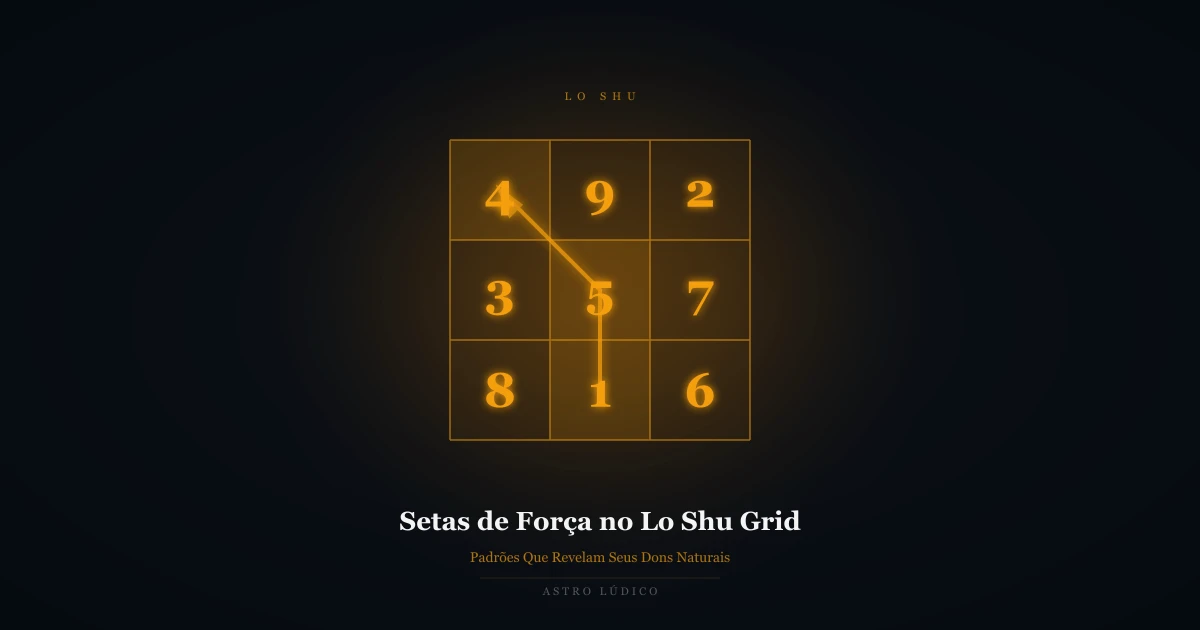
Force Arrows in the Lo Shu Grid
Discover how Force Arrows reveal your natural gifts and dominant traits through the patterns formed when three aligned cells are all present in your Lo Shu Grid.
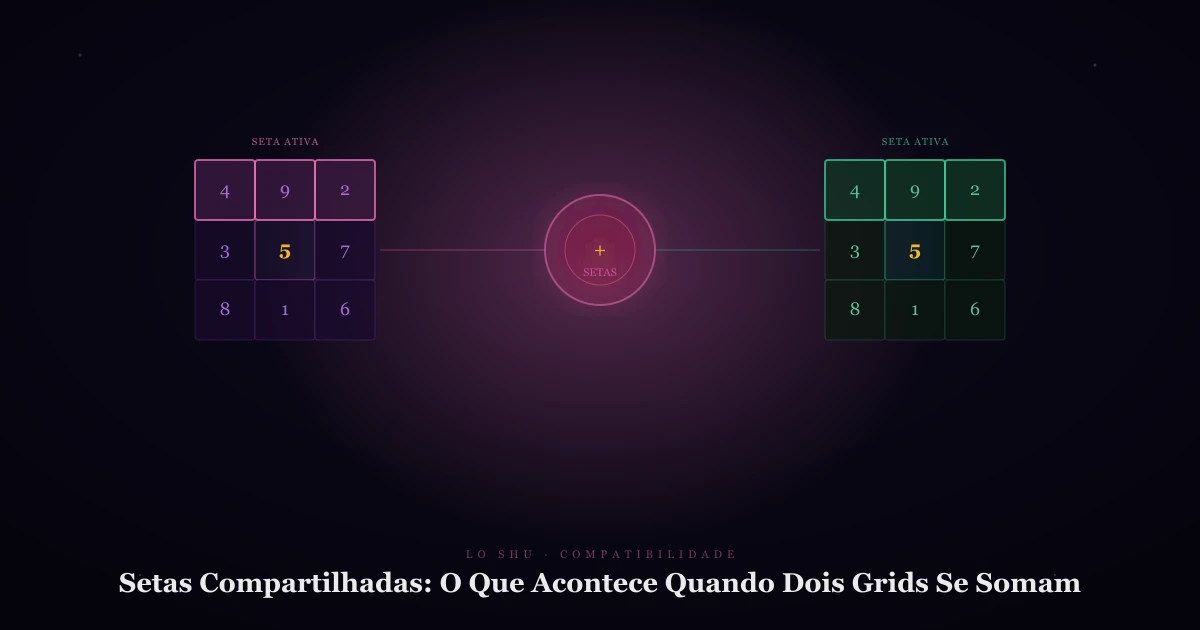
Shared Arrows in Lo Shu: What Happens When Two Grids Combine
Learn how Arrows of Strength and Weakness interact when two Lo Shu Grids are read together, and what shared or missing arrows reveal about a relationship's potential.
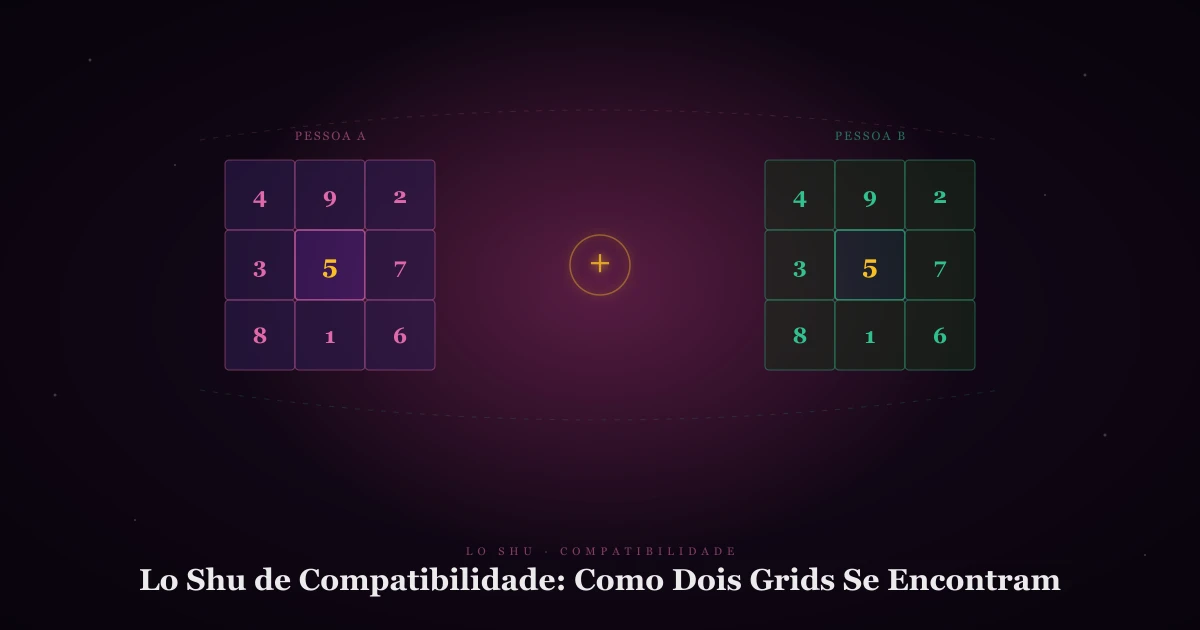
Lo Shu Compatibility: How Two Grids Come Together
Discover how to read compatibility using two Lo Shu Grids: what happens when two birth date maps are compared and what the combined reading can help you discuss about a relationship.