On this page
- How Each Grid Is Built
- The Structure of the Lo Shu Grid
- How Two Grids Are Compared
- Resonance: What Both Have in Common
- Complementarity: What One Has That the Other Doesn't
- Shared Gaps: The Joint Challenge
- What the Lo Shu Reading Does Not Do
- A method check for Lo Shu Compatibility: How Two Grids Come Together
- A question for your next reading
- A second pass through the grid context
The Lo Shu Grid is a nine-position magic square that maps the digits of a person's birth date. When two people are analyzed together — each with their own grid — a compatibility reading emerges that reveals how the energies of both complement, conflict with, or amplify each other. This is the foundation of Lo Shu compatibility numerology.
How Each Grid Is Built
Each person's grid is formed by the digits of their birth date in DD/MM/YYYY format. Each digit from 1 to 9 is placed in the corresponding cell of the 3×3 square. Zero is ignored. Repeated digits appear multiple times in the same cell. The result is a visual map of the person's energetic resources and absences.
The Structure of the Lo Shu Grid
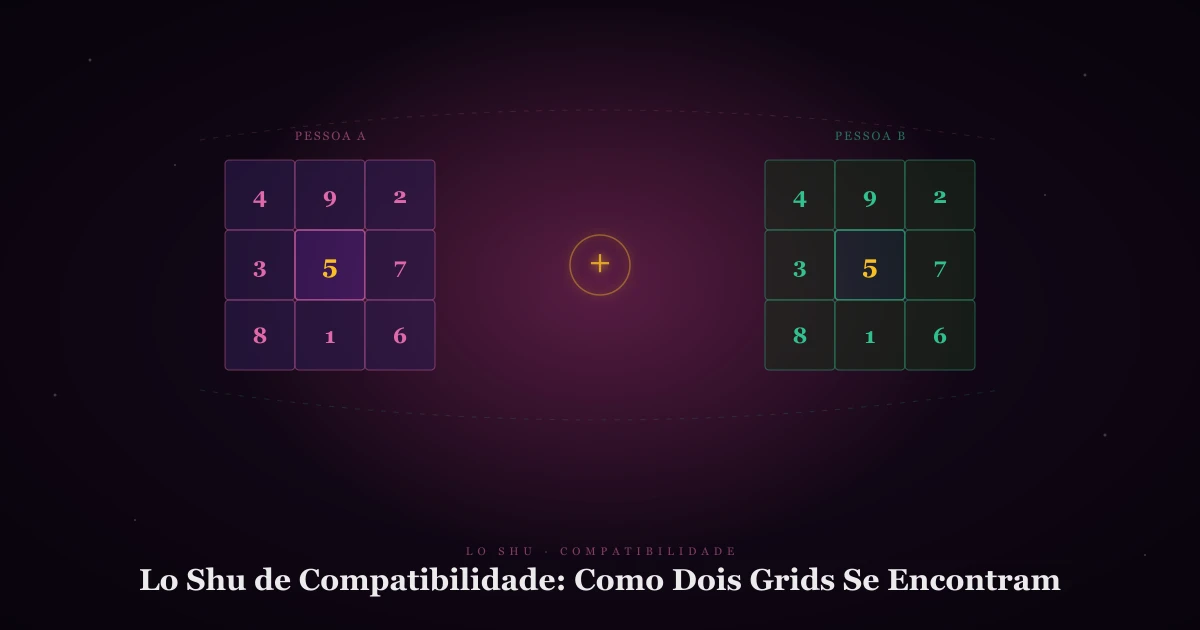
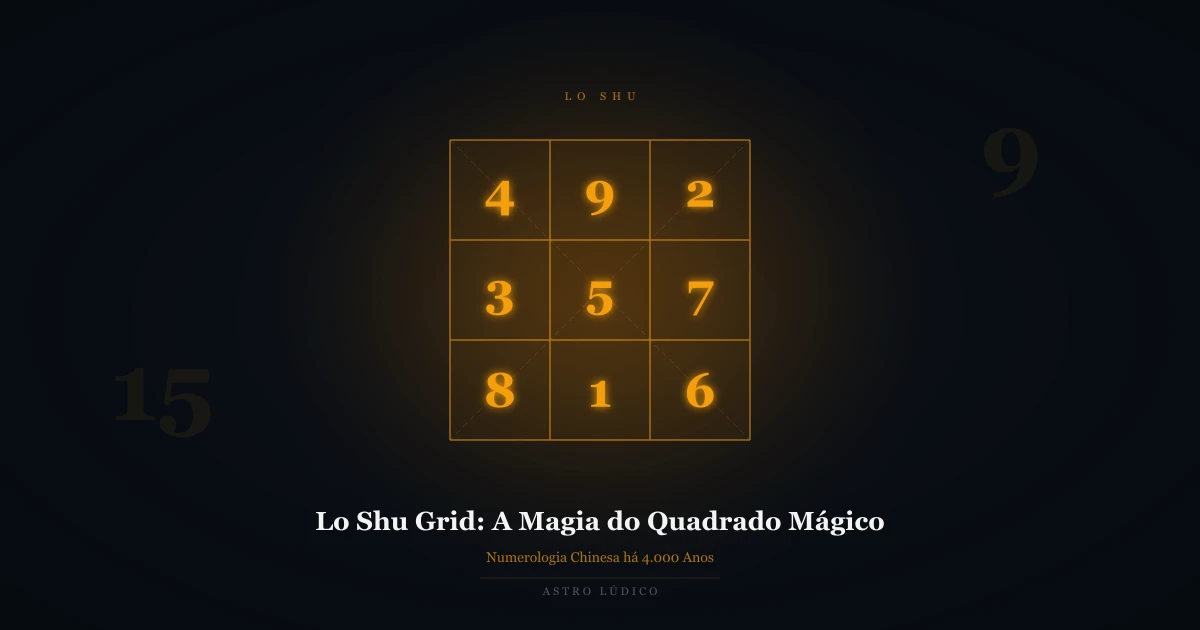
The Lo Shu square is organized as follows: top row (4-9-2), middle row (3-5-7), and bottom row (8-1-6). This arrangement is not arbitrary — each row, column, and diagonal sums to 15, creating a mathematical balance that Chinese numerology associates with harmony and the flow of the cosmos.
How Two Grids Are Compared
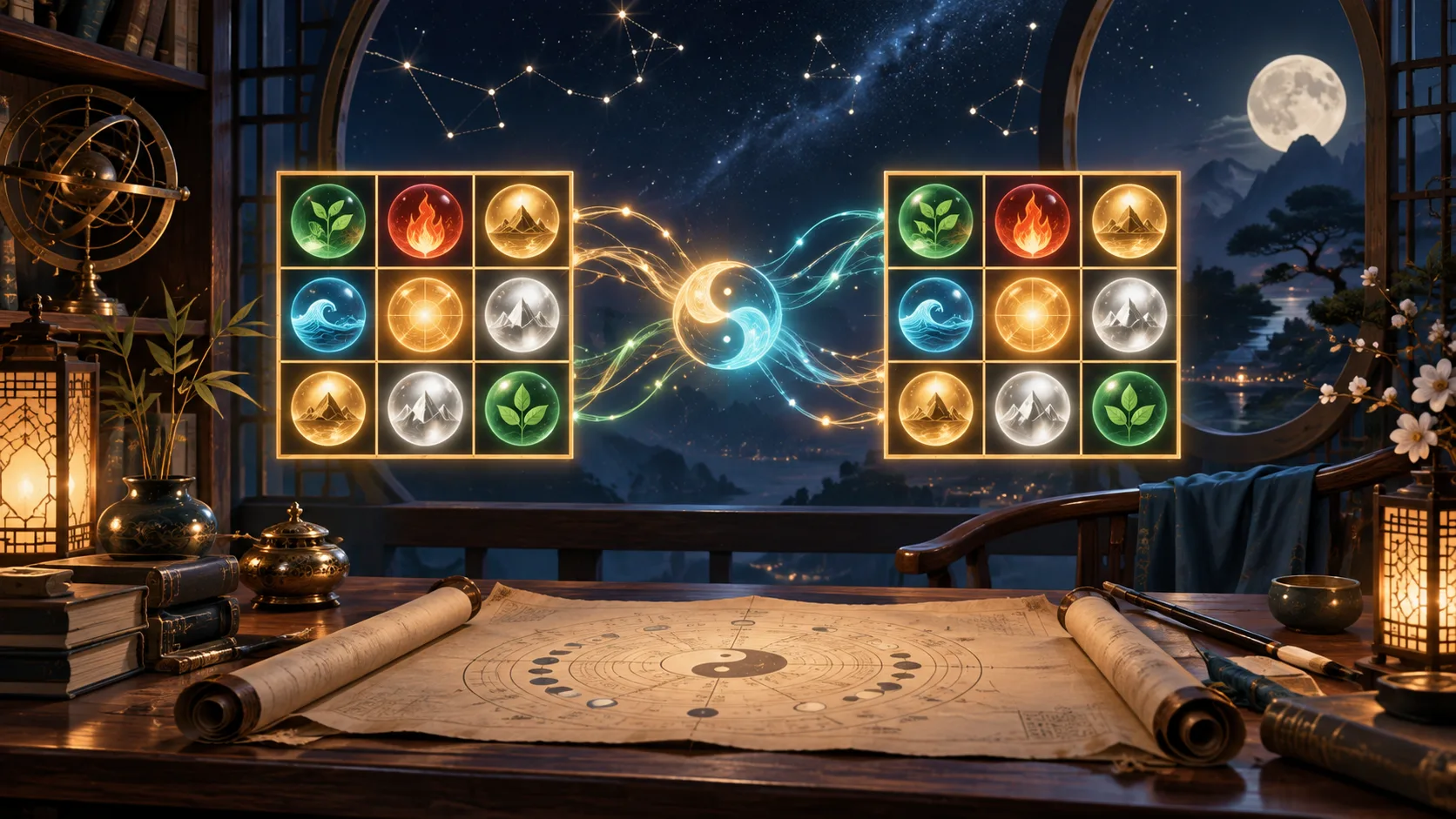
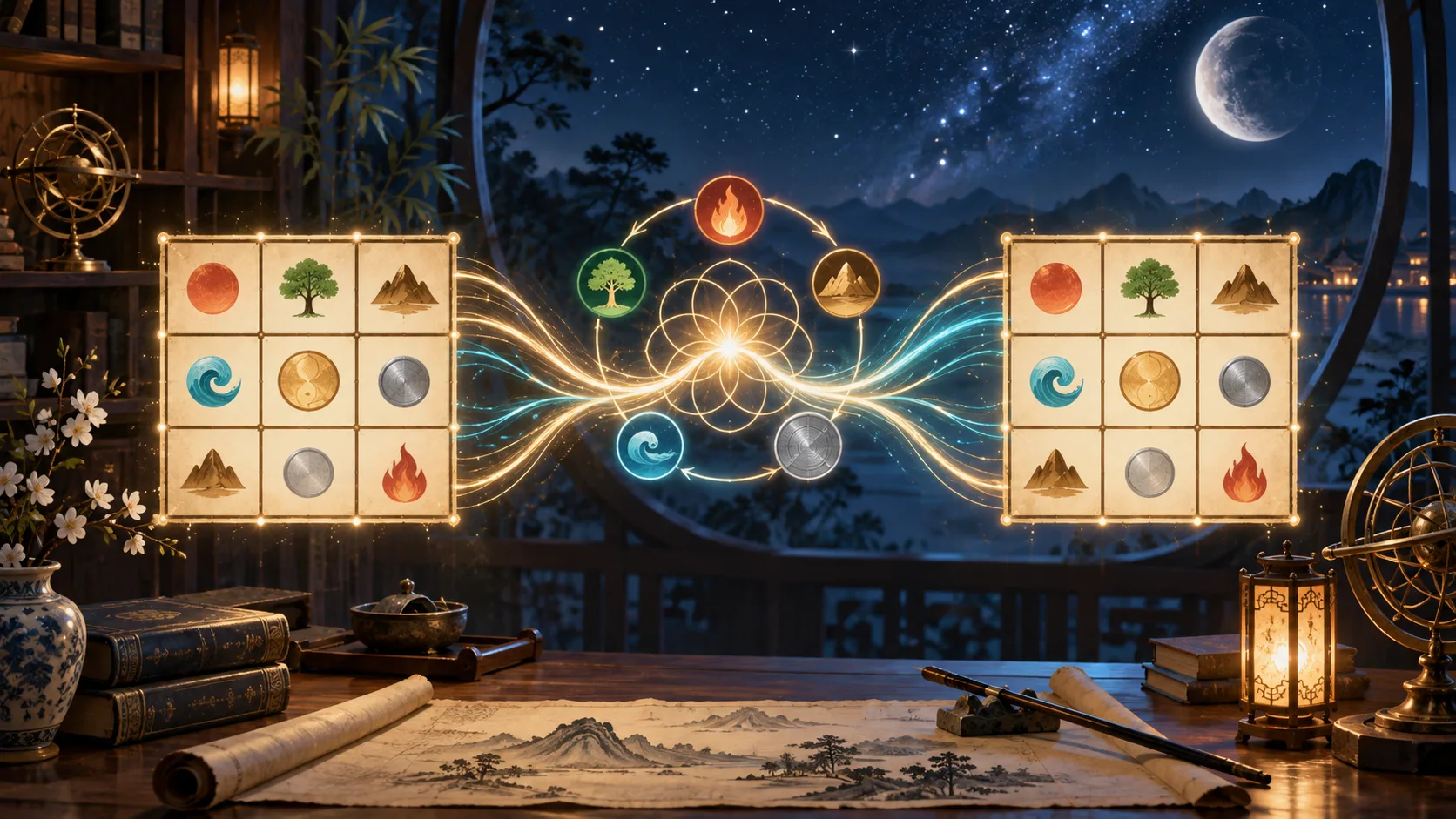
In a Lo Shu compatibility reading, the two grids are analyzed side by side. The analyst observes: which numbers both have in common (resonance points), which numbers one has that the other does not (complementarity points), and which numbers are absent in both grids (shared gaps the relationship needs to develop).
Resonance: What Both Have in Common
When two partners share the same numbers in the grid, there is a natural resonance — an ease of mutual understanding in those qualities. For example, both having the number 5 present tend to share an adaptable and communicative worldview. However, many identical numbers can also amplify the same shadow patterns.
Complementarity: What One Has That the Other Doesn't
The points of greatest potential in a Lo Shu relationship are often the complementarities: when one partner has a number the other doesn't, they naturally bring that quality to the relationship. A partner with 1 (intuition, inner leadership) can compensate for the absence of this number in the other, and vice versa.
Shared Gaps: The Joint Challenge
When a number is absent in both grids, the relationship shares that energetic gap. This means both will need to consciously develop that quality — whether through intentional effort, learning from others, or creating practices that compensate for this joint absence.
What the Lo Shu Reading Does Not Do
The Lo Shu compatibility reading does not predict the success or failure of a relationship. It offers an energetic map of the natural dynamics between two profiles. Two people with very different grids can have a deeply complementary relationship. Two very similar grids can generate comfort or stagnation. The context, intention, and level of awareness of those involved always modulate the result.
By learning to read two grids together, you gain a new language to understand the relationships that matter most in your life — not as fixed destiny, but as a map of potential to be explored with awareness and care.
A method check for Lo Shu Compatibility: How Two Grids Come Together
The method becomes more useful when the reader can reproduce it and see where interpretation begins. Build each person’s Lo Shu grid separately before comparing cells, repetitions, absences, arrows, or annual values. A shared pattern is a conversation prompt; it is not a combined score that can certify a relationship. For this article, keep the canonical grid before discussing compatibility.
A small example
Choose one cell that appears in both grids and one that is absent in both. Describe how each person could experience the pattern differently, then ask a question that both can answer without a label. In “Lo Shu Compatibility: How Two Grids Come Together”, write the input and the observed result before choosing a meaning.
Keep the neighbouring concept separate
Two grids side by side do not replace the individual context or the consent of the people involved. Annual numbers describe a period of attention, not a timetable for a couple. Keep this distinction explicit while reading “Lo Shu Compatibility: How Two Grids Come Together”.
Turn the result into an observation
Keep a short note for “Lo Shu Compatibility: How Two Grids Come Together”: the input, the displayed position, one interpretation, and one observation from ordinary life. Revisit it after a few days and allow the observation to change the question. This simple loop protects the reader from treating a first impression as a verdict. Use “Lo Shu Compatibility: How Two Grids Come Together” as a prompt, then compare it with one ordinary observation.
A question for your next reading
What shared practice would make the pattern observable, and what difference between the two grids deserves respect instead of correction? If the prompt creates fear, pressure, or a consequential decision, pause and use ordinary evidence and qualified support. For “Lo Shu Compatibility: How Two Grids Come Together”, let the next question be about the canonical grid before discussing compatibility.
Before closing the reading, check:
- grids built separately
- shared and different cells named
- relationship choices remain consensual
Share a Lo Shu reading with care
When you share “Lo Shu Compatibility: How Two Grids Come Together”, explain which input and position produced the reading. Point to one observable detail from the article—the cells, repetitions, absences, or arrows actually present—and leave room for another person to disagree. A symbolic result can open a conversation, but it cannot label a partner, promise a financial outcome, or replace qualified advice.
A second pass through the grid context
Return to “Lo Shu Compatibility: How Two Grids Come Together” and compare the first impression with the canonical grid, a daily habit, and the limits of the correspondence.
On a second pass through “Lo Shu Compatibility: How Two Grids Come Together”, compare the interpretation with the canonical grid, a daily habit, and the limits of the correspondence. If lived evidence points elsewhere, keep the observation and revise the question. That is a more honest use of a symbolic method than forcing the chart to deliver a verdict.
Did this guide help you?
Astro Ludico is an independent project. Your support helps us create more free tools and educational content.
About the Author: Kelwin Felipe
Creator of Astro Lúdico, software developer and independent researcher in Cabalistic Numerology, dedicated to translating ancestral wisdom into practical and intuitive tools for self-knowledge.
From study to practice
Put this into practice
Explore the related interactive tool: Lo Shu Compatibility.
Continue the path
Next in this study path
Move forward through the sequence selected by the editorial graph.
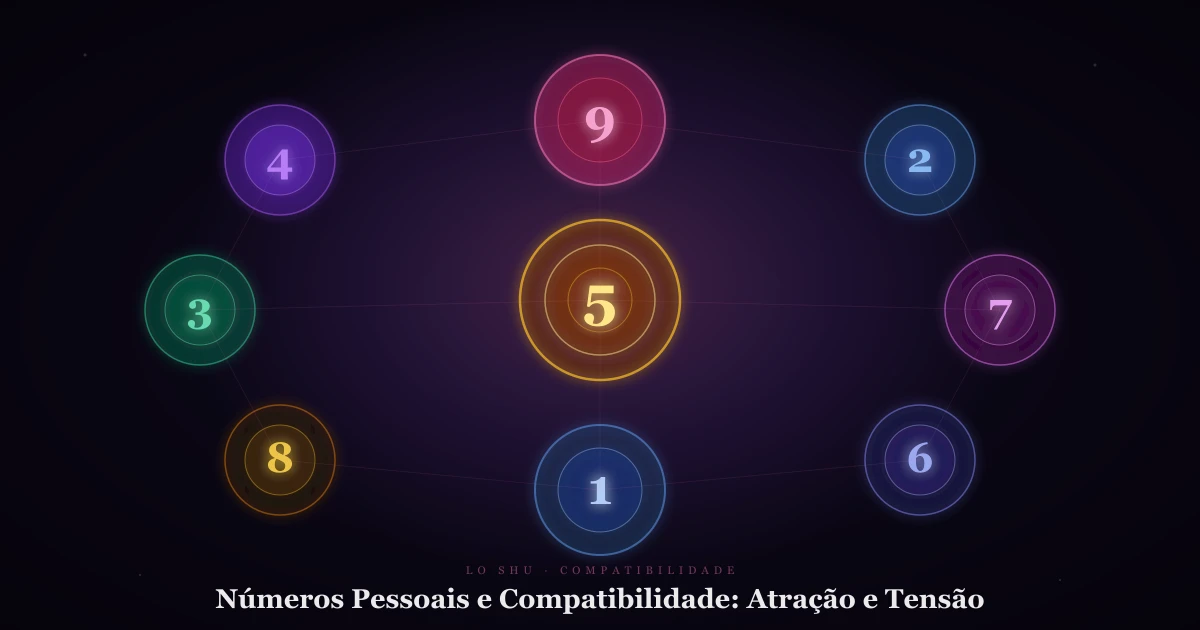
Personal Numbers and Lo Shu Compatibility: Attraction and Tension
Learn how the personal number in the Lo Shu system reflects your core energy and how it interacts with another person's number to create attraction, harmony, or productive tension.
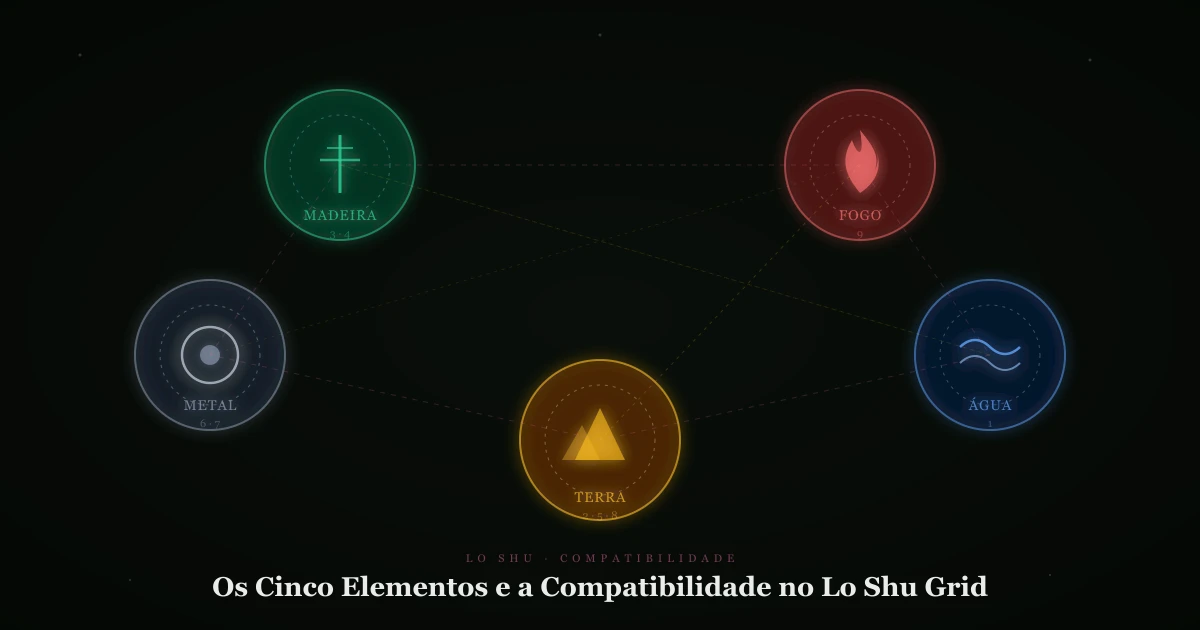
The Five Elements and Lo Shu Compatibility
Explore how the Five Elements of Chinese cosmology — Wood, Fire, Earth, Metal, and Water — shape compatibility in the Lo Shu Grid and offer prompts for discussing the dynamic between two people.
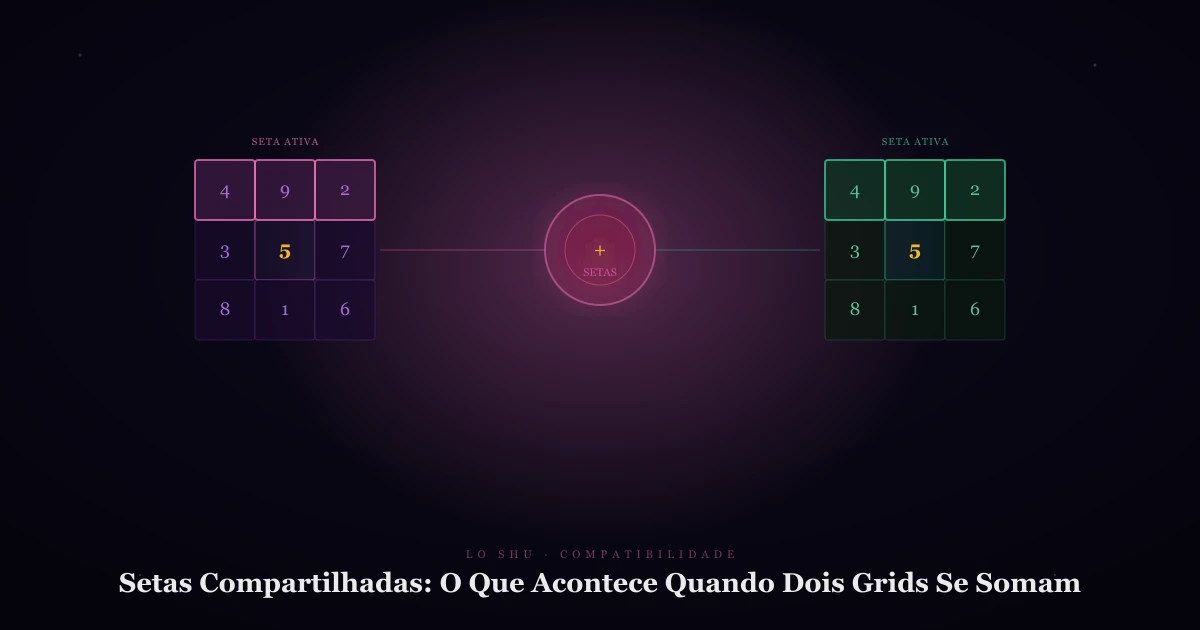
Shared Arrows in Lo Shu: What Happens When Two Grids Combine
Learn how Arrows of Strength and Weakness interact when two Lo Shu Grids are read together, and what shared or missing arrows reveal about a relationship's potential.
Keep exploring
Related studies
Explore adjacent questions selected for this article.
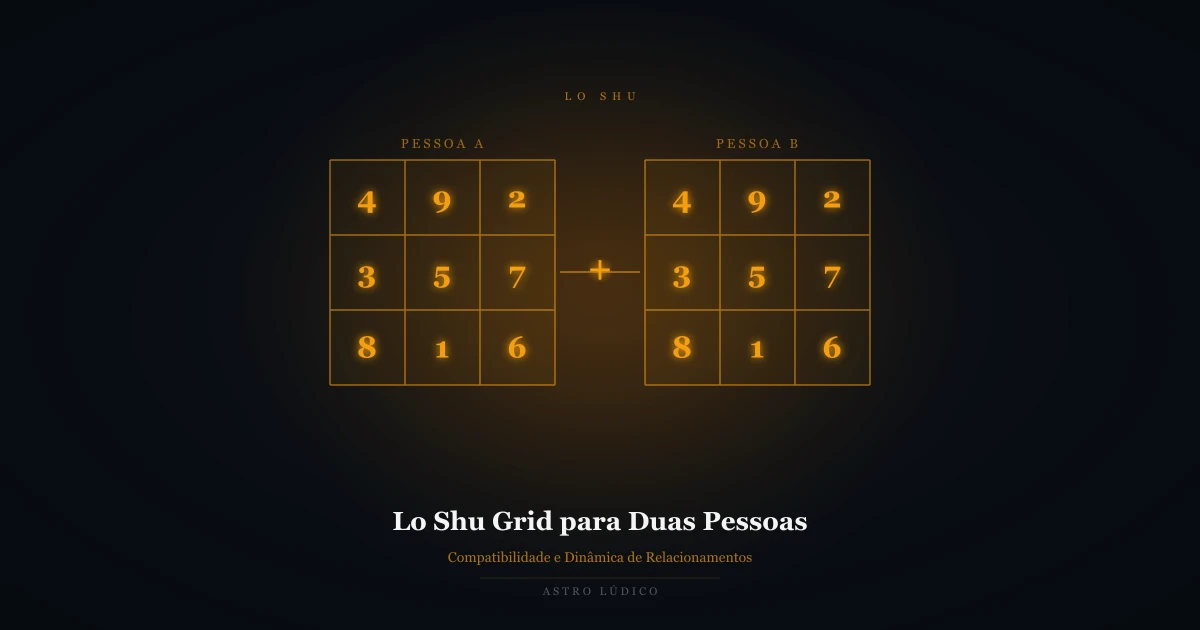
Lo Shu Grid: Reading Two People's Maps Side by Side
Learn how to compare two Lo Shu Grids to understand complementarity, shared themes, and tension points between two people — whether in love, friendship, or professional partnership.
Lo Shu Grid: Introduction to the 4,000-Year-Old Magic Square
Discover the Lo Shu Grid, an ancient Chinese magic square where every row, column, and diagonal sums to 15. Learn how to map your birth date onto the grid and interpret your personal strengths and development areas.
Annual Couple Cycle: How the Personal Number Affects the Relationship Each Year
Discover how the Lo Shu annual cycle interacts with both partners' personal numbers to frame a conversation about the theme of each year in the relationship.