On this page
- What the Lo Shu Personal Number Is
- The 9 Numbers and Their Relational Energies
- Attraction Patterns in Lo Shu
- Productive Tension Patterns
- Number 5: The Wildcard of Compatibility
- How to Use This Analysis
- A method check for Personal Numbers and Lo Shu Compatibility: Attraction and Tension
- A question for your next reading
- A second pass through the grid context
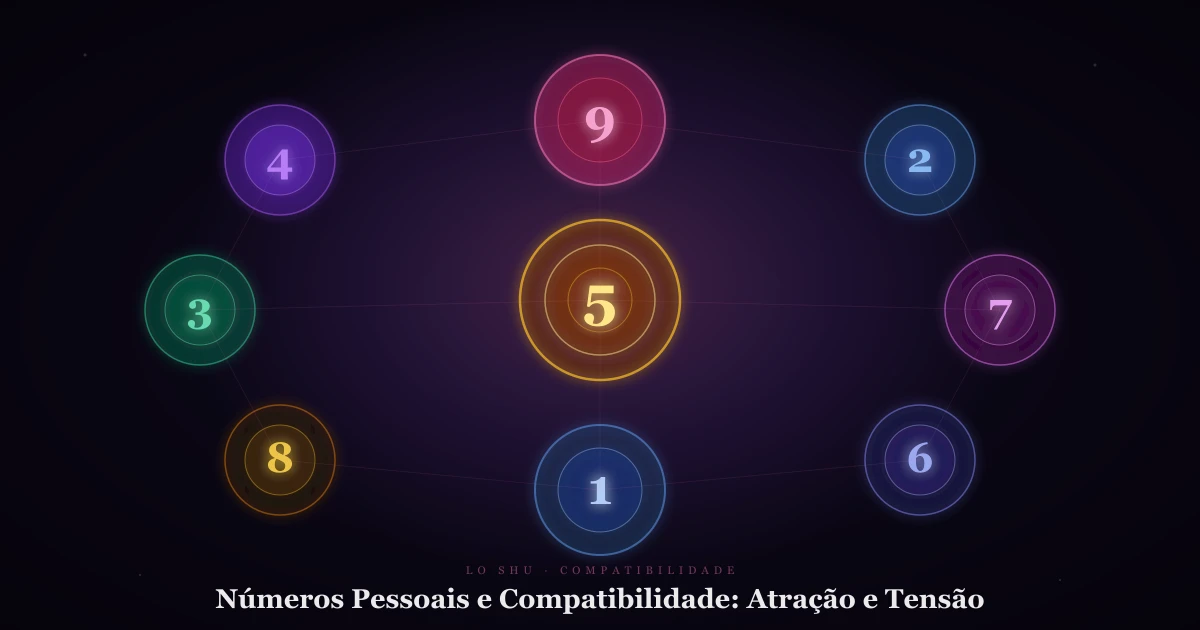
Within the Lo Shu system, the personal number — also called the central number or birth year number — is one of the most revealing elements for understanding compatibility. While the complete grid shows the detailed map of resources and absences, the personal number captures the energetic essence of a person: their dominant vibration, their way of relating to the world and to others.
What the Lo Shu Personal Number Is
The Lo Shu personal number is calculated from the birth year and follows the 9-year cycle of the system. It represents the person's natal energetic position within the great cycle — the starting point from which they see the world. Each number from 1 to 9 has characteristic qualities, challenges, and ways of relating.
The 9 Numbers and Their Relational Energies
- 1 (Water): deep, intuitive, reserved. Relates best with those who respect their inner space.
- 2 (Earth): caring, diplomatic, sensitive. Seeks harmony and may struggle with direct conflict.
- 3 (Young Wood): creative, expansive, optimistic. Needs partners who support their growth.
- 4 (Mature Wood): stable, hardworking, methodical. Values commitment and long-term building.
- 5 (Central Earth): adaptable, communicative, magnetic. The most versatile — can relate to all numbers.
- 6 (Metal): perfectionist, responsible, nurturing. Seeks partners who share their high standards.
- 7 (Metal): spiritual, analytical, introspective. Needs space for reflection within the relationship.
- 8 (Earth): ambitious, practical, determined. Complements well with those who balance the energy.
- 9 (Fire): charismatic, generous, visionary. Attracts many, but needs partners who anchor their energy.
Attraction Patterns in Lo Shu
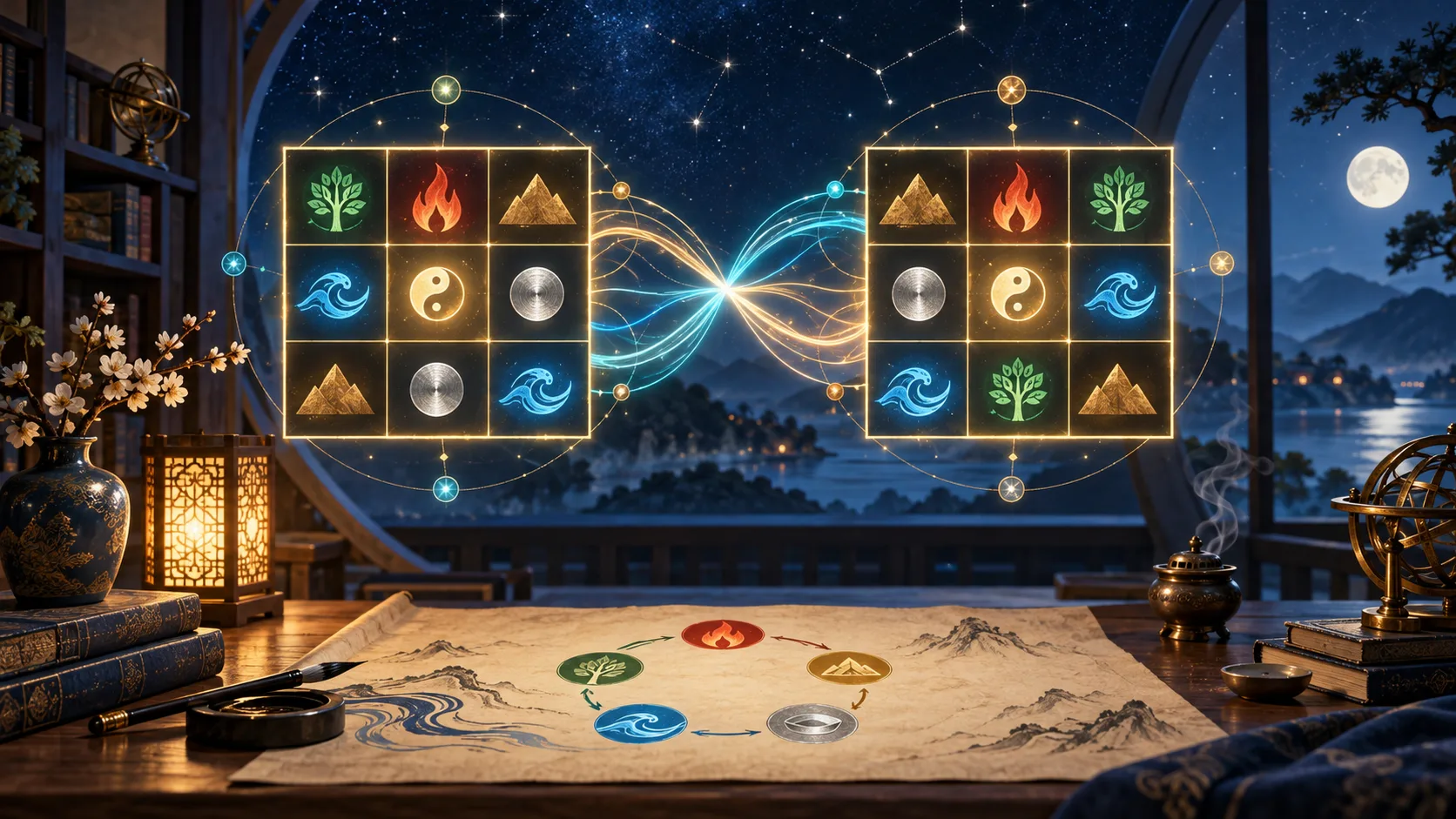
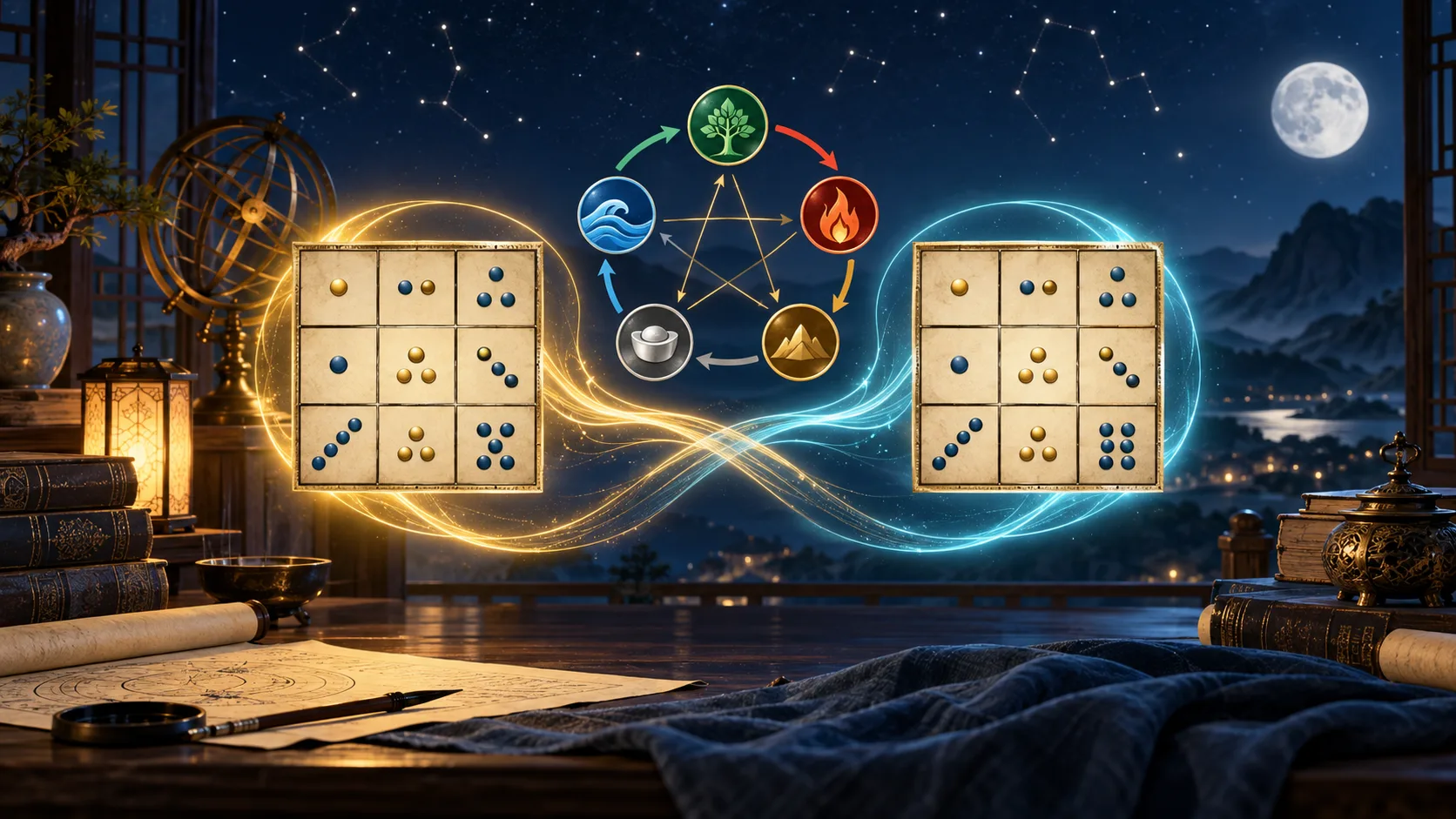
Certain numbers have a natural affinity based on the Five Elements. Numbers belonging to the same element or to elements that nourish each other tend to create relationships of greater ease and flow. For example, 3 and 4 (both Wood) share similar values. 1 (Water) feeds 3 and 4 (Wood), creating a natural support relationship.
Productive Tension Patterns
Numbers from elements that control each other in the Five Elements cycle — such as Metal (6, 7) and Wood (3, 4), or Water (1) and Fire (9) — can create tension. But tension is not incompatibility. Often, these are exactly the relationships that generate the most growth, as each partner challenges the other to expand beyond their comfort zones.
Number 5: The Wildcard of Compatibility
The number 5 occupies the center of the Lo Shu grid and therefore has natural access to all directions and energies. People with personal number 5 tend to adapt well to any other number — they are like energetic bridges. However, this versatility also means they need clarity about their own identity to avoid getting lost in their partner's energies.
How to Use This Analysis
- Calculate your personal number and your partner's.
- Identify the elements corresponding to each number.
- Check whether the elements nourish, control, or are neutral toward each other.
- Analyze the complete grids to see more specific complementarities.
- Remember that the personal number is a starting point, not a sentence.
Analyzing Lo Shu personal numbers opens a fascinating conversation about why we feel attracted to certain people and tensioned by others. More than predicting compatibility, it teaches us something about ourselves — about what we seek and what we offer in any relationship.
A method check for Personal Numbers and Lo Shu Compatibility: Attraction and Tension
The method becomes more useful when the reader can reproduce it and see where interpretation begins. Build each person’s Lo Shu grid separately before comparing cells, repetitions, absences, arrows, or annual values. A shared pattern is a conversation prompt; it is not a combined score that can certify a relationship. For this article, keep each person’s number line before comparing the two inputs.
A small example
Choose one cell that appears in both grids and one that is absent in both. Describe how each person could experience the pattern differently, then ask a question that both can answer without a label. In “Personal Numbers and Lo Shu Compatibility: Attraction and Tension”, write the input and the observed result before choosing a meaning.
Keep the neighbouring concept separate
Two grids side by side do not replace the individual context or the consent of the people involved. Annual numbers describe a period of attention, not a timetable for a couple. Keep this distinction explicit while reading “Personal Numbers and Lo Shu Compatibility: Attraction and Tension”.
Turn the result into an observation
Keep a short note for “Personal Numbers and Lo Shu Compatibility: Attraction and Tension”: the input, the displayed position, one interpretation, and one observation from ordinary life. Revisit it after a few days and allow the observation to change the question. This simple loop protects the reader from treating a first impression as a verdict. Use “Personal Numbers and Lo Shu Compatibility: Attraction and Tension” as a prompt, then compare it with one ordinary observation.
A question for your next reading
What shared practice would make the pattern observable, and what difference between the two grids deserves respect instead of correction? If the prompt creates fear, pressure, or a consequential decision, pause and use ordinary evidence and qualified support. For “Personal Numbers and Lo Shu Compatibility: Attraction and Tension”, let the next question be about each person’s number line before comparing the two inputs.
Before closing the reading, check:
- grids built separately
- shared and different cells named
- relationship choices remain consensual
Share a Lo Shu reading with care
When you share “Personal Numbers and Lo Shu Compatibility: Attraction and Tension”, explain which input and position produced the reading. Point to one observable detail from the article—the cells, repetitions, absences, or arrows actually present—and leave room for another person to disagree. A symbolic result can open a conversation, but it cannot label a partner, promise a financial outcome, or replace qualified advice.
A second pass through the grid context
Return to “Personal Numbers and Lo Shu Compatibility: Attraction and Tension” and compare the first impression with the canonical grid, a daily habit, and the limits of the correspondence.
On a second pass through “Personal Numbers and Lo Shu Compatibility: Attraction and Tension”, compare the interpretation with the canonical grid, a daily habit, and the limits of the correspondence. If lived evidence points elsewhere, keep the observation and revise the question. That is a more honest use of a symbolic method than forcing the chart to deliver a verdict.
Did this guide help you?
Astro Ludico is an independent project. Your support helps us create more free tools and educational content.
About the Author: Kelwin Felipe
Creator of Astro Lúdico, software developer and independent researcher in Cabalistic Numerology, dedicated to translating ancestral wisdom into practical and intuitive tools for self-knowledge.
Content graph
The pillar guide for this theme
Build the broader context before exploring this focused article.
Lo Shu Compatibility: How Two Grids Come Together
Read first
Helpful foundations
These articles establish the concepts used here.
From study to practice
Put this into practice
Explore the related interactive tool: Lo Shu Compatibility.
Continue the path
Next in this study path
Move forward through the sequence selected by the editorial graph.
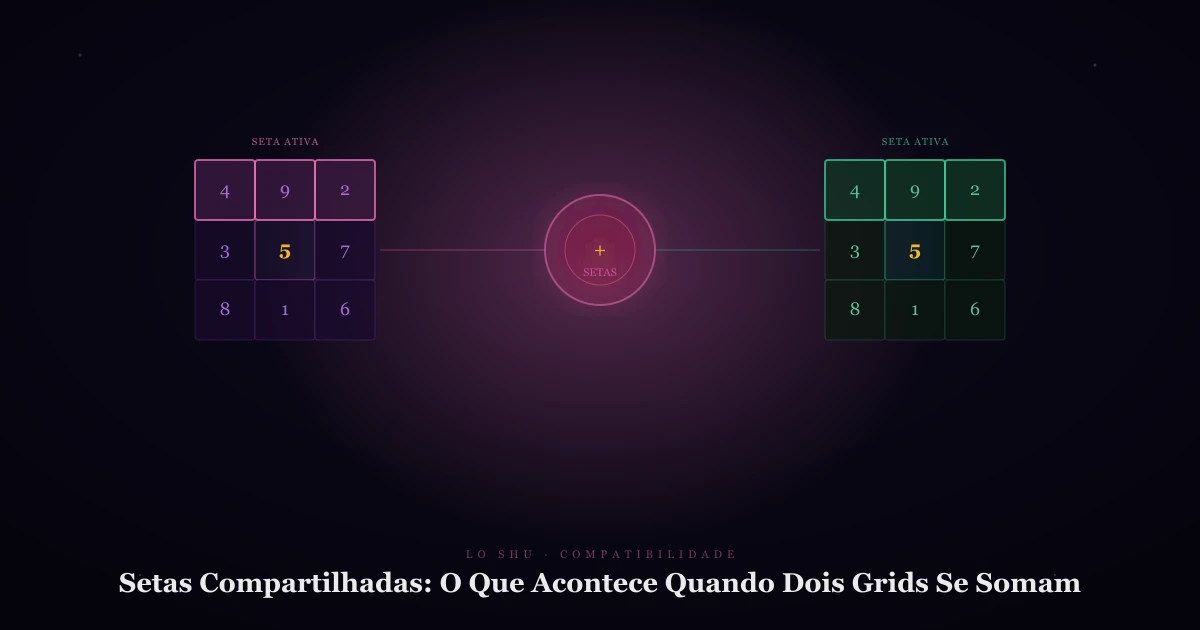
Shared Arrows in Lo Shu: What Happens When Two Grids Combine
Learn how Arrows of Strength and Weakness interact when two Lo Shu Grids are read together, and what shared or missing arrows reveal about a relationship's potential.
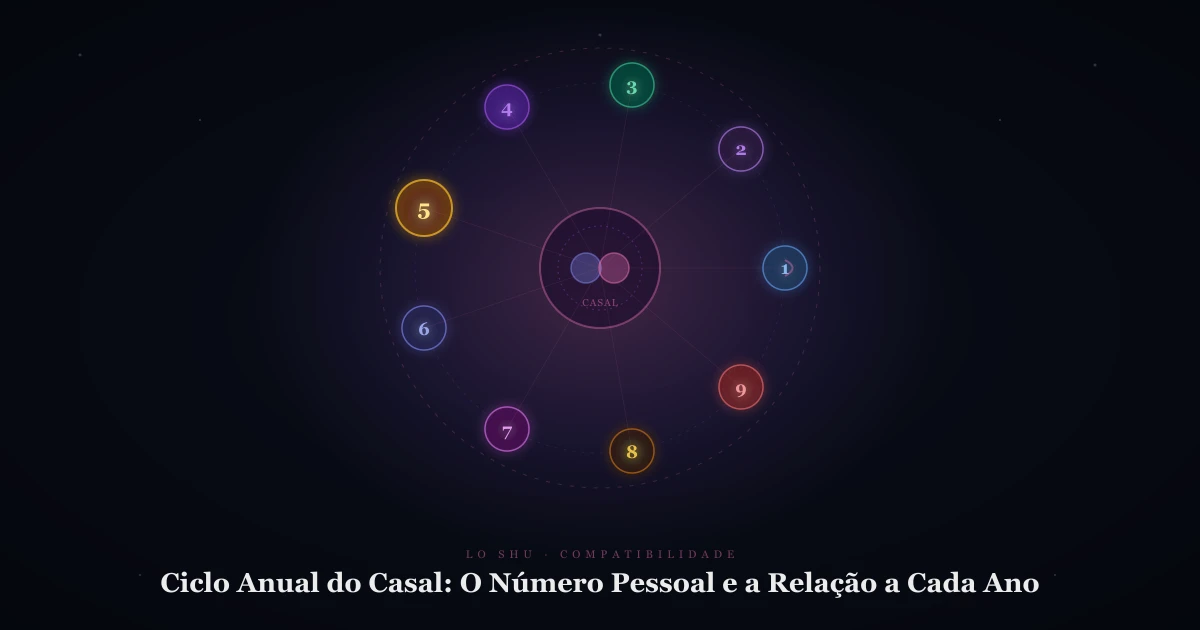
Annual Couple Cycle: How the Personal Number Affects the Relationship Each Year
Discover how the Lo Shu annual cycle interacts with both partners' personal numbers to frame a conversation about the theme of each year in the relationship.
Keep exploring
Related studies
Explore adjacent questions selected for this article.
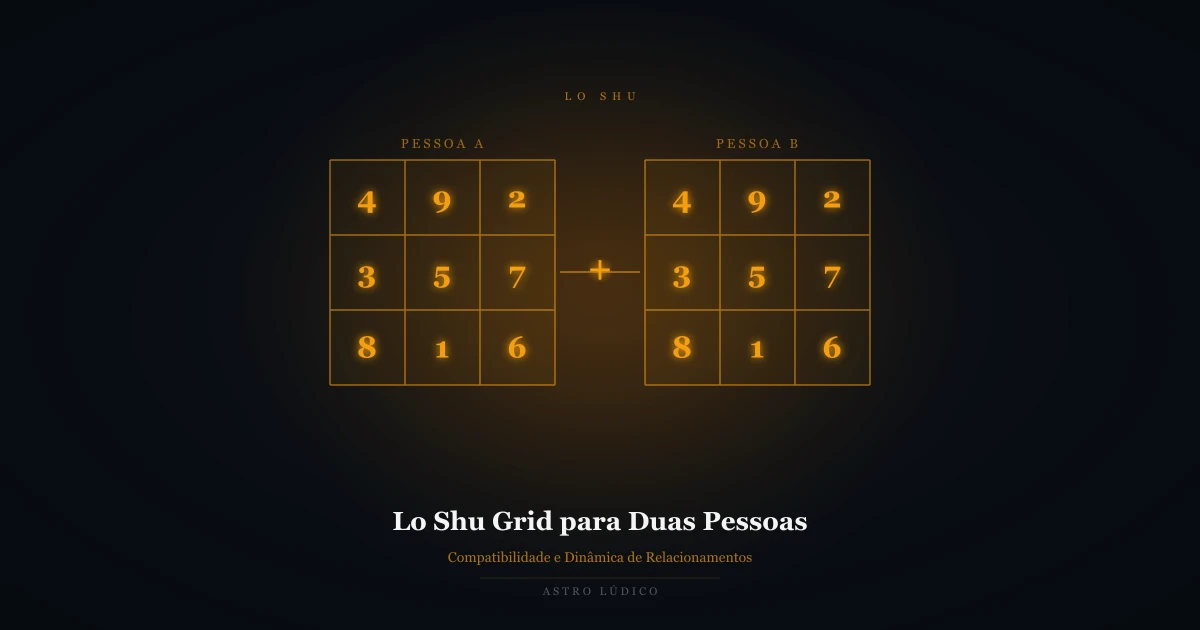
Lo Shu Grid: Reading Two People's Maps Side by Side
Learn how to compare two Lo Shu Grids to understand complementarity, shared themes, and tension points between two people — whether in love, friendship, or professional partnership.
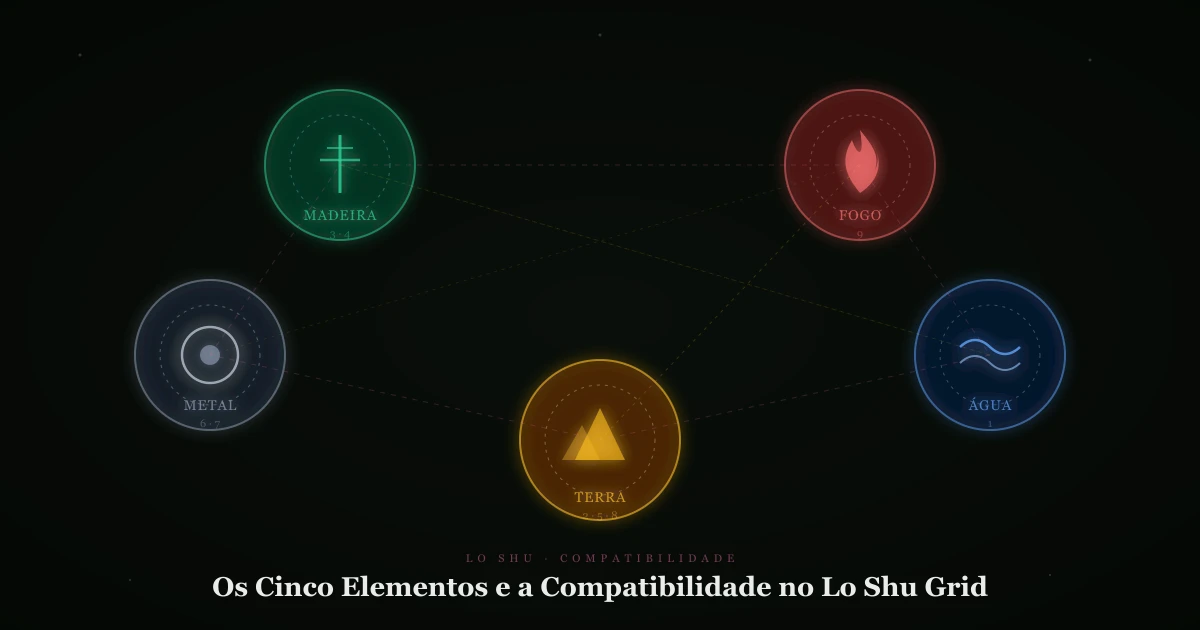
The Five Elements and Lo Shu Compatibility
Explore how the Five Elements of Chinese cosmology — Wood, Fire, Earth, Metal, and Water — shape compatibility in the Lo Shu Grid and offer prompts for discussing the dynamic between two people.
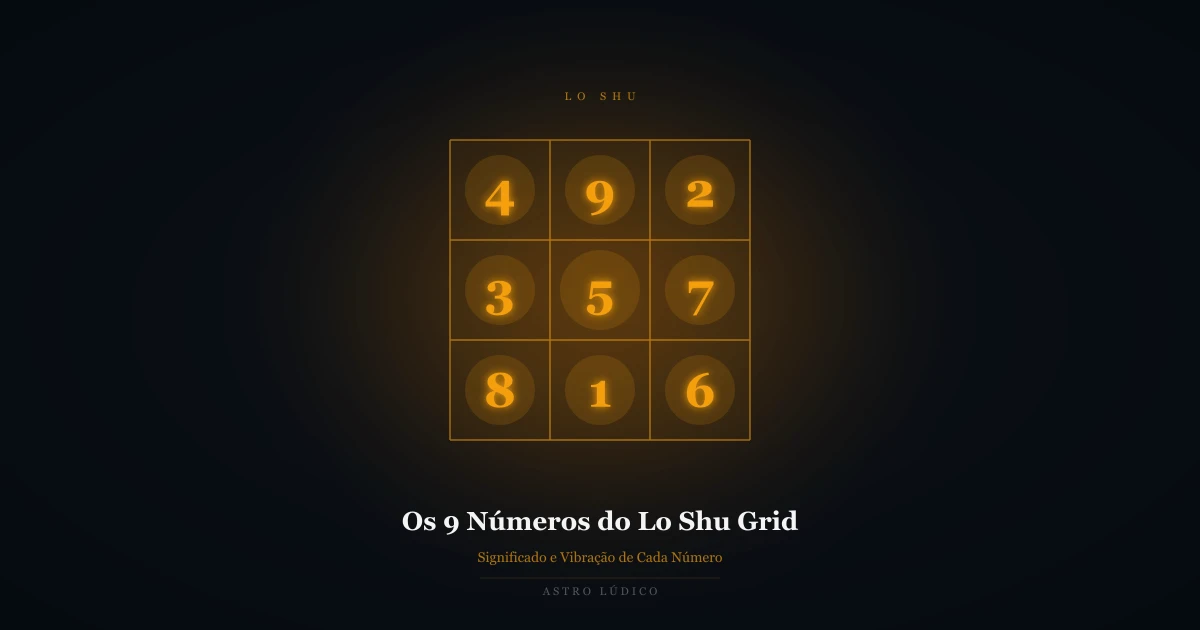
The 9 Numbers of the Lo Shu Grid: Meaning and Vibration
Discover the individual meaning and vibration of each of the 9 numbers in the Lo Shu Grid, how their position shapes the reading, and how their presence or absence can become a reflection prompt.