On this page
- The Four Main Karmic Debt Numbers
- How Karmic Debts are Calculated
- The Difference Between Karmic Debts and Karmic Lessons
- The Psychological Impact of Karmic Debts
- Working Symbolically with Karmic-Number Themes
- A method check for Karmic Numbers: What They Are, How to Identify and Work with Them
- A question for your next reading
- A second pass through the number context
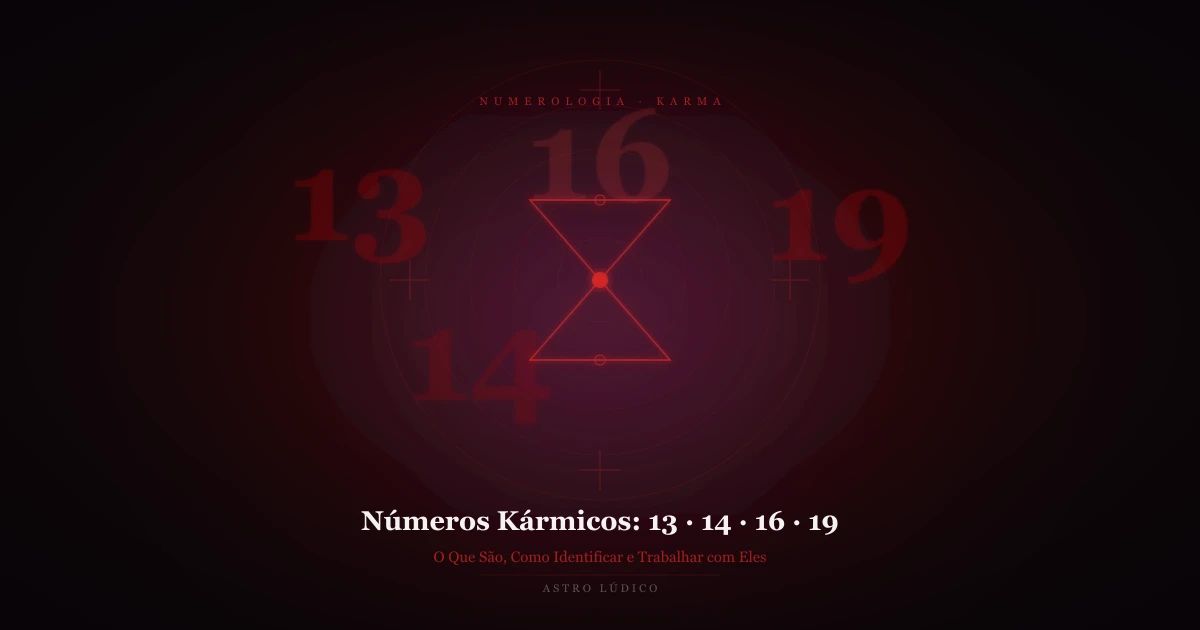
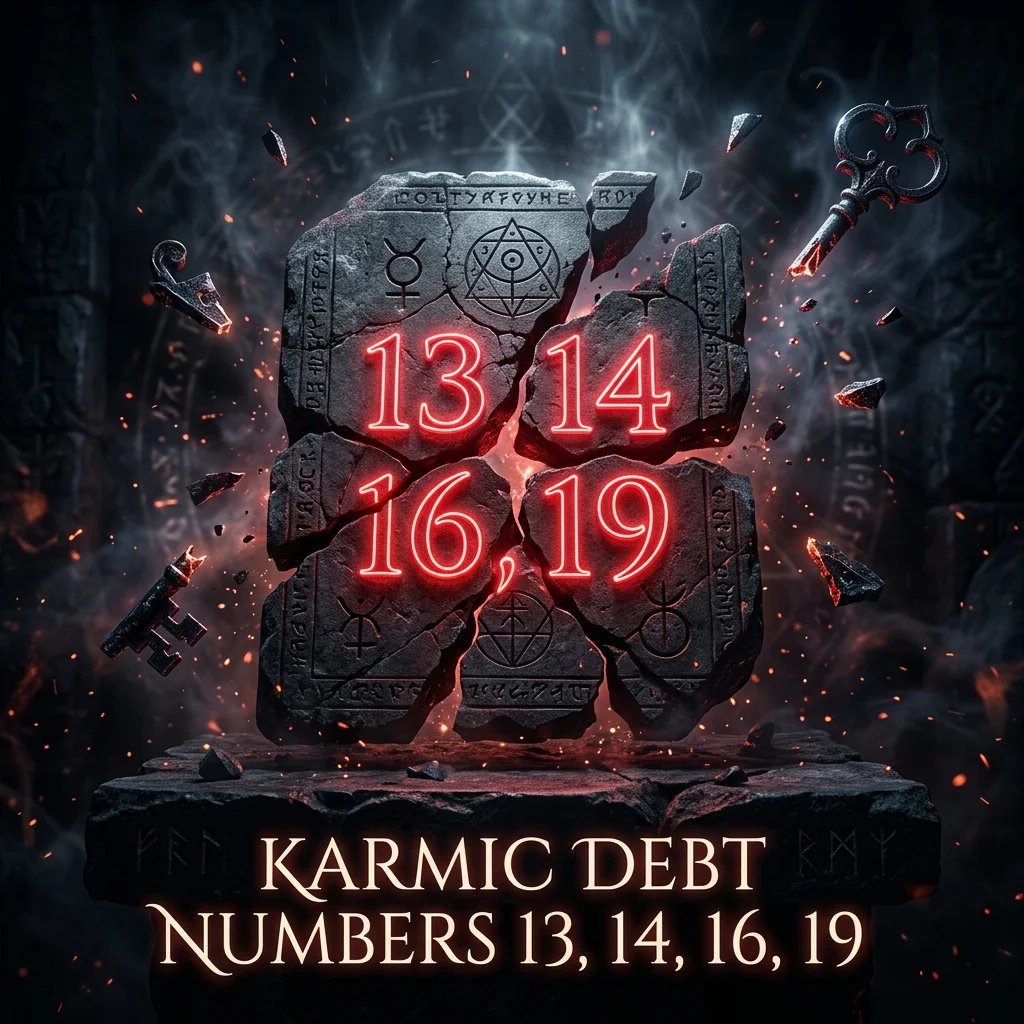
In the study of numerology, certain numbers carry a unique weight known as 'Karmic Debt'. Some traditions read these numbers as demanding themes; this project treats them as symbolic prompts, not evidence that a soul chose a course or that past lives caused anything. In Cabalistic and Pythagorean systems, there are four primary Karmic Debt numbers: 13, 14, 16, and 19. If any of these appear in your core calculations (soul number, personality, or life path), they can invite attention to specific themes.
The Four Main Karmic Debt Numbers
Each number is traditionally associated with a theme of effort, balance, or responsibility; this is not a factual account of a previous incarnation:
Karmic Debt 13: The Lesson of Hard Work and Discipline
This number is traditionally associated with questions about effort, structure, and follow-through; it does not describe a past life. A reader may use it to observe how effort and structure appear in ordinary tasks. The symbol is not a forecast of difficulty. A practical prompt is to test one small, consistent step instead of treating the label as a verdict. The number does not grant an ability; any change depends on practice and context.
Karmic Debt 14: The Lesson of Temperance and Freedom
In this tradition, 14 is associated with questions about moderation, flexibility, and responsibility; it does not establish a past misuse. A reader may compare the theme with present habits, without treating it as a prediction, diagnosis, or explanation of addiction. A practical prompt is to examine one choice about balance and support. It does not guarantee adaptability or wisdom.
Karmic Debt 16: The Lesson of Humility and Ego Dissolution
Traditionally associated with questions about pride, humility, and power; it does not establish what happened in a past life. The image of the Tower is sometimes used to discuss structures that no longer serve; it does not predict a collapse in a relationship, career, or belief. A practical prompt is to review one assumption and one repairable action. It does not confer spiritual insight or rebirth as a guaranteed result.
Karmic Debt 19: The Lesson of Independence and Generosity
This number is traditionally associated with questions about independence, cooperation, and use of influence; it does not establish past abuse of power. A reader may use the theme to notice how asking for help and standing independently appear in the present. A practical prompt is to balance autonomy with reciprocal support. It does not guarantee leadership or a particular social role.
How Karmic Debts are Calculated
In conventions that use this label, it is assigned when an intermediate sum is 13, 14, 16, or 19 before reduction; the label belongs to the method, not to a verified cause. For example, if your birth day is the 13th, 14th, 16th, or 19th of any month, the tool displays that label for the chosen input. In name calculations, if the sum of your vowels (Soul Urge) or consonants (Personality) or the total letters (Expression) sums up to 13, 14, 16, or 19 before reducing, the output shows the label in that field; interpretation still needs context.
The Difference Between Karmic Debts and Karmic Lessons
It is important to differentiate between Karmic Debts and Karmic Lessons. In numerology, a Karmic Lesson is indicated by a missing number in your birth name (for example, if your name has no letters that vibrate to the number 5, you have a Karmic Lesson 5, traditionally used as an invitation to examine flexibility or change). Karmic Lessons represent minor traits you need to develop, like elective school courses. Karmic Debt is a strong symbolic label for recurring themes; it does not describe a major debt of the soul or require a person to transmute anything.
The Psychological Impact of Karmic Debts
Readers sometimes use this label to discuss recurring themes, but it does not diagnose a psychological pattern. For example, a reader may use 13 to ask how effort and task structure feel in ordinary situations, leading to procrastination or a feeling that life is unfair. the 14 theme can prompt a question about balance rather than a claim about someone’s habits, struggle to maintain a stable career, or feel a deep, unsatisfied longing for something 'more' or 'different'. The value is a vocabulary for reflection; it is not a developmental roadmap or a promise of change.
Furthermore, these debts can deeply influence interpersonal dynamics. In love, the 16 theme may invite reflection on how conflict affects identity and communication; it does not predict or attract a partner. the 19 theme can frame a question about responsibility and reciprocity; it does not make a person attract codependent relationships, learning that true leadership requires mutual support. By recognizing that these challenges are symbolic themes for reflection, you can stop projecting blame onto others and choose concrete actions and seek support when the situation is serious.
Working Symbolically with Karmic-Number Themes
Within this tradition, a karmic-number label can serve as a symbolic question about effort, moderation, humility, or reciprocity. It is not an objective debt and does not produce a guaranteed spiritual result. The questions below support reflection without treating the number as a diagnosis, punishment, or obligation:
- What recurring situation would be useful to observe without assigning blame?
- What small practice could make the constructive side of the theme visible?
- Which boundary, conversation, or support would fit the present context?
- What evidence would show that the interpretation is useful, and what would suggest setting it aside?
A constructive reinterpretation can change the question a reader asks, but it does not erase a past, prove a soul's history, or unlock a fixed spiritual potential.
A method check for Karmic Numbers: What They Are, How to Identify and Work with Them
The method becomes more useful when the reader can reproduce it and see where interpretation begins. Use the term “karmic” as the article’s symbolic vocabulary and identify the exact number, input, and position before interpreting it. A label may describe a recurring theme in the tradition; it does not prove a past-life debt or assign blame.
A small example
Write the raw calculation, the traditional theme, and one present-day behaviour that could be explored. If the theme creates shame or fear, pause and return to ordinary evidence and support.
Keep the neighbouring concept separate
A karmic number is not a moral score, a diagnosis, or a sentence. It differs from a general challenge because the label belongs to a specific convention and must remain open to context.
Turn the result into an observation
Keep a short note for “Karmic Numbers: What They Are, How to Identify and Work with Them”: the input, the displayed position, one interpretation, and one observation from ordinary life. Revisit it after a few days and allow the observation to change the question. This simple loop protects the reader from treating a first impression as a verdict.


A question for your next reading
What pattern can I investigate without punishment language, what choice is available now, and what support would make the reflection safer? If the prompt creates fear, pressure, or a consequential decision, pause and use ordinary evidence and qualified support.
Before closing the reading, check:
- number and convention named
- past-life claims avoided
- present choice and support emphasized
Share a numerology reading with care
When you share “Karmic Numbers: What They Are, How to Identify and Work with Them”, explain which input and position produced the reading. Point to one observable detail from the article—the exact name or date input and one observable choice—and leave room for another person to disagree. A symbolic result can open a conversation, but it cannot label a partner, promise a financial outcome, or replace qualified advice.
A second pass through the number context
Return to “Karmic Numbers: What They Are, How to Identify and Work with Them” and compare the first impression with the input, the reduction rule, and what the person actually experiences.
On a second pass through “Karmic Numbers: What They Are, How to Identify and Work with Them”, compare the interpretation with the input, the reduction rule, and what the person actually experiences. If lived evidence points elsewhere, keep the observation and revise the question. That is a more honest use of a symbolic method than forcing the chart to deliver a verdict.
Did this guide help you?
Astro Ludico is an independent project. Your support helps us create more free tools and educational content.
About the Author: Kelwin Felipe
Creator of Astro Lúdico, software developer and independent researcher in Cabalistic Numerology, dedicated to translating ancestral wisdom into practical and intuitive tools for self-knowledge.
Content graph
The pillar guide for this theme
Build the broader context before exploring this focused article.
Cabalistic Numerology: A Complete Guide to the Soul's Numerical Map
Read first
Helpful foundations
These articles establish the concepts used here.
From study to practice
Put this into practice
Explore the related interactive tool: Cabalistic Numerology.
Continue the path
Next in this study path
Move forward through the sequence selected by the editorial graph.
Keep exploring
Related studies
Explore adjacent questions selected for this article.
Karmic Debt Numbers Explained: 13, 14, 16, and 19
Understand what Karmic Debt Numbers are in Cabalistic Numerology, what each of the four core numbers means, and how to work with them consciously.
Master Numbers 11 and 22: Privilege or Responsibility?
Explore the immense power and heavy burdens of carrying the Master Numbers 11 and 22 in your numerology chart.

Name Vibration in Numerology: A Symbolic Guide to Patterns
Learn how numerological traditions associate letters and numbers with symbolic patterns, while keeping personal choices and lived experience at the center.