On this page
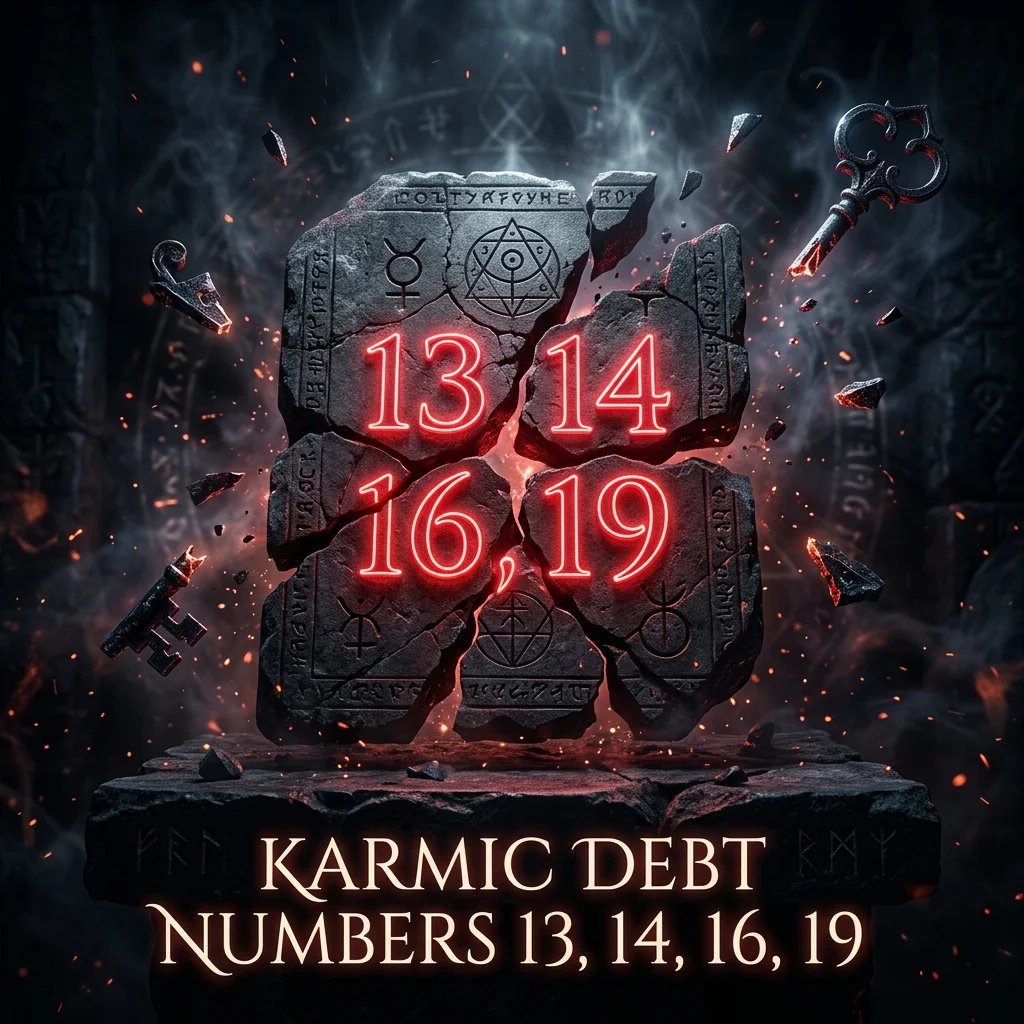
Karmic Debt Numbers are symbolic indicators in Cabalistic Numerology often associated with recurring lessons, friction, or areas that need conscious work. They are not punishments. They are learning patterns that can be understood and engaged with.
What Are Karmic Debt Numbers?
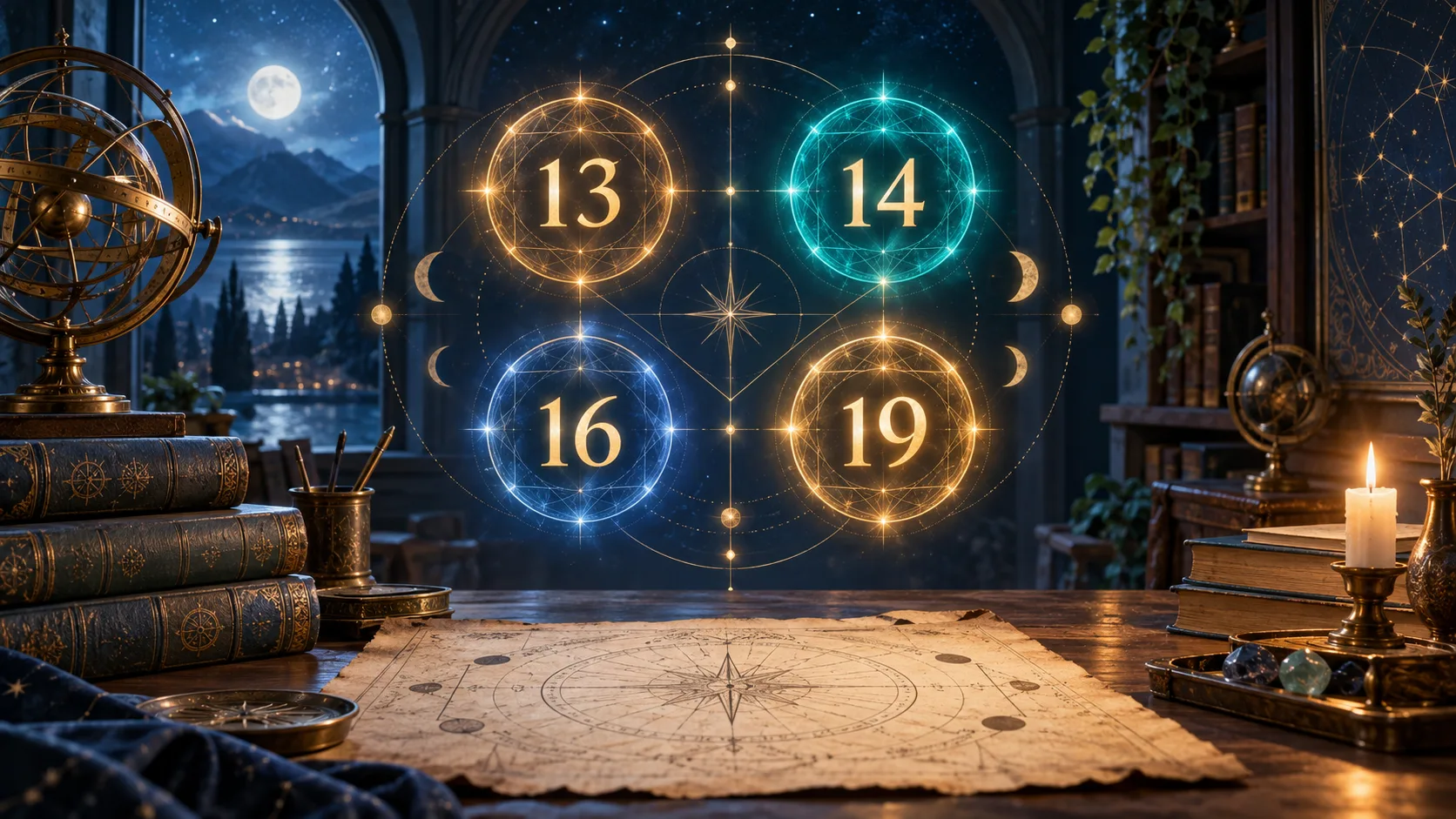
In Cabalistic Numerology, most compound numbers are reduced to a single digit before interpretation. The four exceptions are 13, 14, 16, and 19. These numbers are read in their unreduced form because each carries a specific karmic signature, a theme that tends to repeat in a person's life until it is consciously acknowledged and worked through.
When these numbers appear in key positions of a numerology chart, such as the Life Path, Expression Number, or Motivation Number, they signal an area that deserves particular attention rather than avoidance.
The Four Core Karmic Debt Numbers
13: Transformation Through Effort
Karmic Debt 13 is associated with work, discipline, and transformation through consistent effort. The core lesson is about not looking for shortcuts. People with 13 prominent in their chart often encounter situations that require them to rebuild from scratch, especially when they have tried to skip steps or evade responsibility. The invitation of this number is to find meaning in the process itself, not only in the result.
14: Balance and Moderation
Karmic Debt 14 points toward themes of balance, moderation, and taking responsibility for one's choices. It often manifests as a pull toward excess in some area of life, whether in relationships, consumption, freedom-seeking, or control. The lesson is not to suppress but to integrate: to find the middle ground between restriction and indulgence.
16: Reorganization and Truth
Karmic Debt 16 is connected to structural change, truth, and the ego's relationship with control. It tends to show up as disruptions to things that were built on shaky foundations, relationships, careers, identities. The disruption is rarely arbitrary. It usually points to something that was not as solid or as honest as it appeared. The invitation is to rebuild on truer ground.
19: Visibility and Humility
Karmic Debt 19 involves themes of visibility, independence, and learning through leadership. People with this number prominent often carry a strong drive for autonomy but encounter lessons about isolation and the limits of going it alone. The lesson is that genuine strength includes the capacity to ask for help and to recognize interdependence as a feature of life, not a weakness.
How to Work with Karmic Debt Numbers
The most important reframe is this: karmic debt numbers are not destiny. They are tendencies. Knowing they are present gives you the opportunity to meet the pattern consciously rather than letting it run in the background.
- Identify where the number appears in your chart, the position determines how it expresses.
- Look for recurring themes in that area of your life, debt numbers tend to show the same pattern across multiple situations.
- Ask what the pattern is trying to teach, not how to escape it.
- Use the positive expression of the number as a compass, what does healthy mastery of this theme look like?
Karmic Debt vs. Karmic Lessons
Karmic Debt Numbers are sometimes confused with Karmic Lessons (numbers that are absent from the birth name). These are different concepts. Karmic Lessons point to qualities that were underdeveloped. Karmic Debt Numbers point to patterns that require active resolution. Both are valuable, but they are not the same thing.
A method check for Karmic Debt Numbers Explained: 13, 14, 16, and 19
The method becomes more useful when the reader can reproduce it and see where interpretation begins. Use the term “karmic” as the article’s symbolic vocabulary and identify the exact number, input, and position before interpreting it. A label may describe a recurring theme in the tradition; it does not prove a past-life debt or assign blame.
A small example
Write the raw calculation, the traditional theme, and one present-day behaviour that could be explored. If the theme creates shame or fear, pause and return to ordinary evidence and support.
Keep the neighbouring concept separate
A karmic number is not a moral score, a diagnosis, or a sentence. It differs from a general challenge because the label belongs to a specific convention and must remain open to context.
Turn the result into an observation
Keep a short note for “Karmic Debt Numbers Explained: 13, 14, 16, and 19”: the input, the displayed position, one interpretation, and one observation from ordinary life. Revisit it after a few days and allow the observation to change the question. This simple loop protects the reader from treating a first impression as a verdict.

A question for your next reading
What pattern can I investigate without punishment language, what choice is available now, and what support would make the reflection safer? If the prompt creates fear, pressure, or a consequential decision, pause and use ordinary evidence and qualified support.
Before closing the reading, check:
- number and convention named
- past-life claims avoided
- present choice and support emphasized
Share a numerology reading with care
When you share “Karmic Debt Numbers Explained: 13, 14, 16, and 19”, explain which input and position produced the reading. Point to one observable detail from the article—the exact name or date input and one observable choice—and leave room for another person to disagree. A symbolic result can open a conversation, but it cannot label a partner, promise a financial outcome, or replace qualified advice.
A second pass through the number context
Return to “Karmic Debt Numbers Explained: 13, 14, 16, and 19” and compare the first impression with the input, the reduction rule, and what the person actually experiences.
On a second pass through “Karmic Debt Numbers Explained: 13, 14, 16, and 19”, compare the interpretation with the input, the reduction rule, and what the person actually experiences. If lived evidence points elsewhere, keep the observation and revise the question. That is a more honest use of a symbolic method than forcing the chart to deliver a verdict.
Did this guide help you?
Astro Ludico is an independent project. Your support helps us create more free tools and educational content.

About the Author: Kelwin Felipe
Creator of Astro Lúdico, software developer and independent researcher in Cabalistic Numerology, dedicated to translating ancestral wisdom into practical and intuitive tools for self-knowledge.
Content graph
The pillar guide for this theme
Build the broader context before exploring this focused article.
Cabalistic Numerology: A Complete Guide to the Soul's Numerical Map
Read first
Helpful foundations
These articles establish the concepts used here.
From study to practice
Put this into practice
Explore the related interactive tool: Cabalistic Numerology.
Keep exploring
Related studies
Explore adjacent questions selected for this article.
Karmic Numbers: What They Are, How to Identify and Work with Them
Understand what Karmic Debt numbers are (13, 14, 16, 19) in numerology, how traditions interpret them, and how to use them as symbolic prompts for reflection.
Master Numbers 11 and 22: Privilege or Responsibility?
Explore the immense power and heavy burdens of carrying the Master Numbers 11 and 22 in your numerology chart.
Master Numbers Explained: 11, 22, and 33 in Cabalistic Numerology
Learn what Master Numbers are, why 11, 22, and 33 are not reduced in Cabalistic Numerology, and what each one means in practice.