
On this page
- A calendar-year cycle
- The calendar year is the boundary
- Cycles do not schedule events
- Compare themes, not good and bad years
- Review at the next turn
- A nine-year cycle as a journal
- Check the arithmetic before the story
- The formula, line by line
- A civil-year result has a clear boundary
- Use the cycle as a journal prompt
- Keep date fields separate from name fields
- Read the nine years as questions
- Why a cycle does not override circumstances
- A calendar check in practice
- What to record in the journal
- The same number can meet different lives
- Use the year with the other fields, not above them
- When the year feels difficult
A calendar-year cycle
The engine reduces the birth day and birth month without preserving masters, adds the digit sum of the current civil year, and reduces the final total without preserving masters. The value changes at the turn of the civil year because the current year input changes; it is not an anniversary-to-anniversary rule.
Validated example: for 14 July in 2026, day 14 reduces to 5, month 7 remains 7, and 2026 contributes 2+0+2+6=10. The total is 5+7+10=22, then the no-master reduction gives 4. The calculator therefore returns Personal Year 4 for that input in 2026.
Cycle, not appointment
The number can be used as a lens for choosing questions, priorities or review habits during a civil year. It cannot guarantee marriage, money, illness, separation, success or any other event. “A cycle associated with a theme” is different from “an event that must happen.”
Personal Year also differs from name-based values. Motivation and Expression use the normalized name; Personal Year uses birth day, birth month and the current year. Record the date of the calculation so that a later run can be compared honestly.
A practical check
- Write the birth day and month used by the form.
- Write the current civil year and its digit sum.
- Confirm that the displayed reduction did not preserve 11, 22 or 33.
- Use the result to plan a reflection, not to outsource a decision.
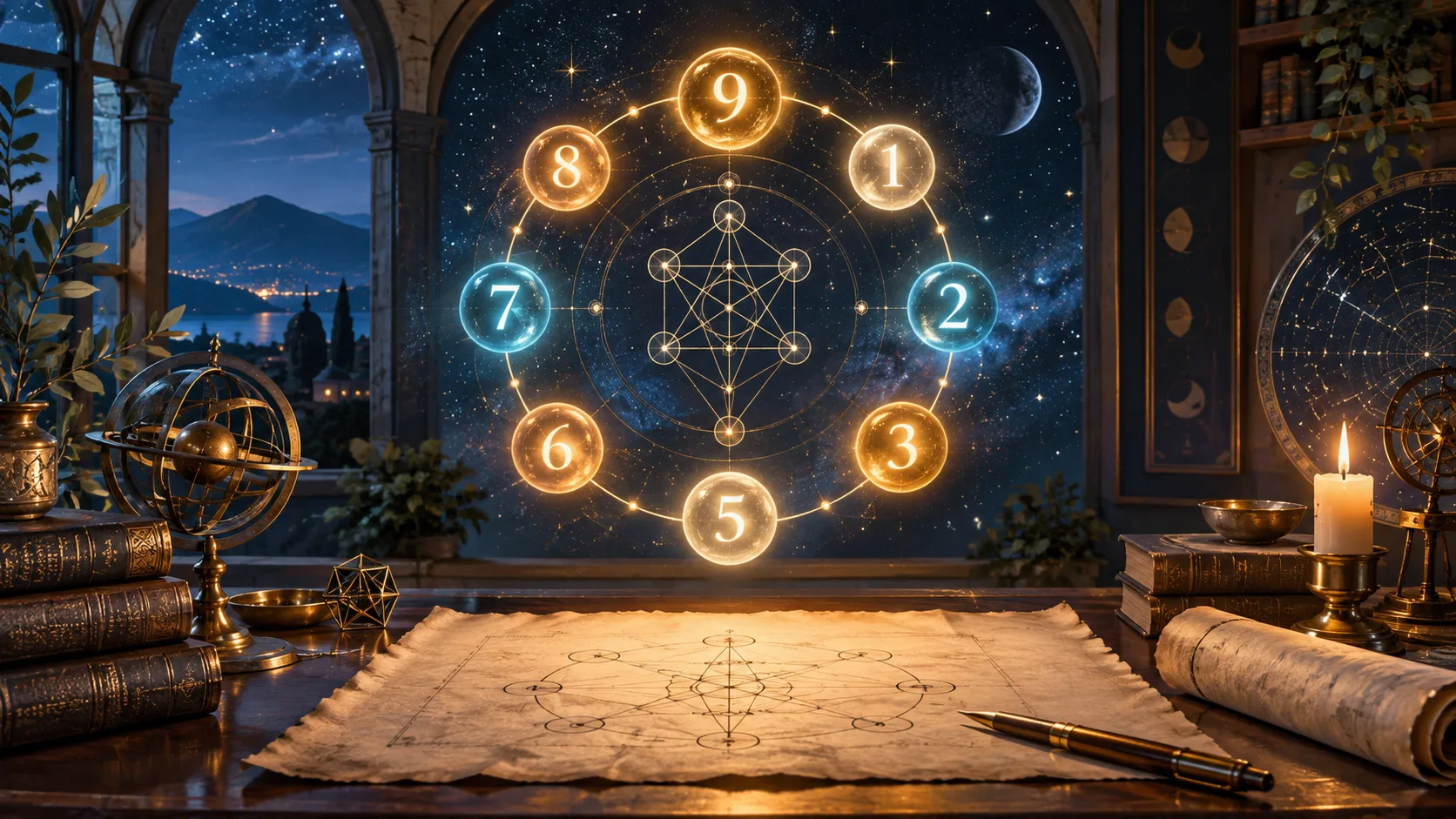
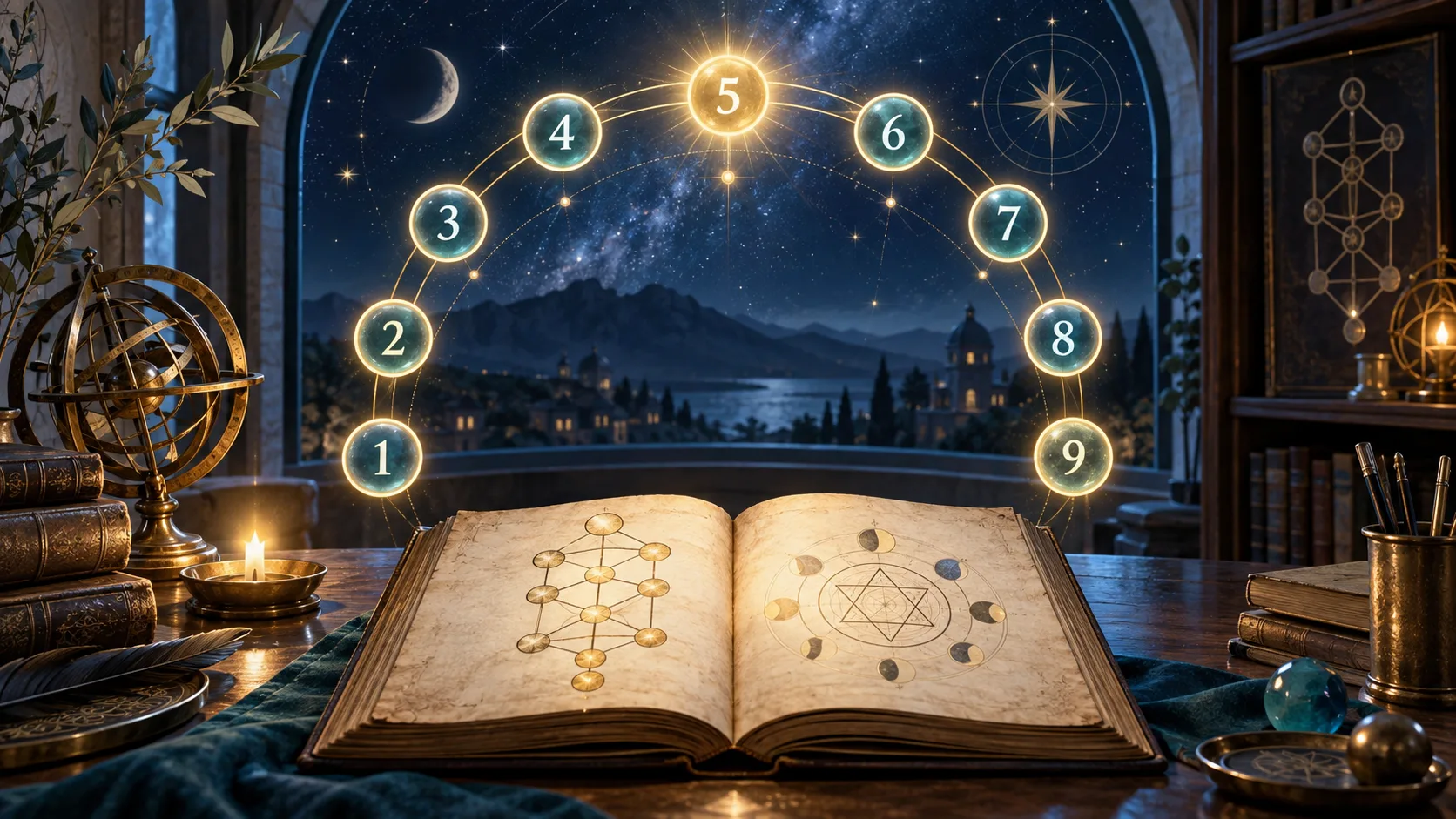
The calendar year is the boundary
This calculator treats the Personal Year as a civil-year calculation. For 14/07/2026, the reduced day is 5, the month is 7 and the year digits total 10; 5+7+10 gives 22, which is reduced without masters to 4. The result changes with the calendar year, not on a birthday.
Cycles do not schedule events
A nine-year sequence can help you review themes over time, but it cannot tell you that a job, relationship or payment will happen. Use the number as a planning prompt alongside practical information, consent and professional advice when relevant.
Compare themes, not good and bad years
Instead of ranking a year as lucky or difficult, ask what kind of attention the symbol invites: beginning, consolidation, review or completion. The same theme can be constructive in one context and tiring in another. Your decisions remain yours.
Review at the next turn
At the next civil-year change, recalculate with the new year and keep a short note about what actually happened. This turns the reading into a record of reflection rather than a promise. Use the calculator to verify the arithmetic before interpreting the cycle.
A nine-year cycle as a journal
You can keep one line per calendar year: the displayed value, the question it raised and the practical context around it. Looking back across nine entries may reveal which interpretations were useful and which were not. The journal is evidence about your reflection, not proof that the number caused an event.
Check the arithmetic before the story
Before assigning a theme, reproduce the day reduction, month value, year digit sum and final reduction exactly as the calculator does. In particular, do not preserve a master number in this field merely because another name-based field preserves it. A transparent calculation prevents a compelling narrative from hiding an input error.
The formula, line by line
The current engine reduces the birth day without masters, reduces the birth month without masters, adds the digits of the current civil year and reduces the final sum without masters. For 14 July 2026: day 14 becomes 5, month 7 stays 7, and 2+0+2+6 gives 10. The total 5+7+10 is 22, which becomes Personal Year 4.
The example is deliberately arithmetic. It shows what the calculator does, not what will happen to a person in that year. Save the input date, the civil year and the intermediate totals so another reader can repeat the result or identify an entry mistake.
A civil-year result has a clear boundary
This implementation uses the calendar year supplied by the runtime, not a birthday-to-birthday anniversary. A calculation run in December and a run in January can therefore use different year digits even when the birthday has not arrived. When publishing a note or screenshot, include the year used by the calculator.
That boundary is practical rather than mystical. It makes the result reproducible and avoids presenting a changing software input as if it were a permanent trait. If another numerology tradition uses a different boundary, label that method instead of mixing the two rules.
Use the cycle as a journal prompt
At the beginning of a civil year, write the displayed value, one question you want to explore and one concrete context such as study, work, rest or a relationship. Revisit the note at the end of the year and mark which questions were useful. This creates evidence about your reflection without claiming that the number caused an event.
A nine-year comparison is most helpful when it includes ordinary circumstances as well as striking events. Otherwise the reader may remember only coincidences and mistake selective memory for a rule. The Personal Year can frame attention; it cannot guarantee timing, success or closure.
Keep date fields separate from name fields
Motivation and Expression are calculated from the normalized name, while Personal Year uses the birth day, birth month and current year. A difference between these outputs is expected because their inputs and reducers differ. Do not carry the master-preserving rule from a name field into Personal Year, which explicitly reduces without masters.
Use the calculator to verify the displayed year, then choose only interpretations that help you make a clearer, self-directed plan. The article is a guide to a repeatable lens, not a schedule that overrides judgment or professional advice.
Read the nine years as questions
- 1 can ask what deserves a first step, not promise a new beginning.
- 2 can ask where patience or cooperation is needed, not guarantee a partnership.
- 3 can ask how an idea wants to be shared, not promise visibility.
- 4 can ask what needs structure, not guarantee a stable result.
- 5 can ask what needs flexibility, not predict travel or upheaval.
- 6 can ask where care and responsibility meet, not decide a family outcome.
- 7 can ask what deserves study or quiet, not declare a year unfit for action.
- 8 can ask how resources are managed, not promise money or status.
- 9 can ask what is ready for review or release, not announce an ending.
This wording keeps the nine-year cycle practical. A person can be in a “4” while changing jobs, a “7” while caring for a family and a “9” while beginning something important. The number is a way to choose a question; circumstances, preparation and other people still shape the answer.
Why a cycle does not override circumstances
Readers often ask whether a Personal Year explains why an event happened or whether it tells them to wait. The safer answer is no. The calculator combines a birth day, a birth month and the civil year according to a fixed rule. It does not inspect a contract, a medical situation, a job market or a relationship. Use the cycle beside ordinary planning: check facts, ask for advice when needed and make room for choices that do not match the keyword.
A calendar check in practice
Run the same birth date once in December and once in January, changing only the civil year. The output can change at the boundary because this implementation uses the calendar year, not a birthday-to-birthday cycle. Recording that boundary prevents a common mistake: treating a software input change as evidence that a person suddenly became a different kind of person.
What to record in the journal
- The date and civil year used in the calculation.
- Day reduction, month value, year digit sum and final reduction.
- One question the number suggested.
- One ordinary action and what you learned from it.
The same number can meet different lives
Two people can share a Personal Year and still have different priorities, resources and responsibilities. One person may use a “4” to organise study, another to rebuild a routine after illness, and another to manage a team. The number does not erase those differences. A good guide gives examples broad enough to recognise and specific enough to test, then leaves room for the reader to decide which context matters.
Use the year with the other fields, not above them
Personal Year comes from a date and a civil year; Motivation and Expression come from a name. If their themes seem to pull in different directions, do not make one cancel the others. Ask which question belongs to time, which belongs to the name and which belongs to the concrete decision in front of you. This separation keeps a cycle reading proportionate and prevents a single digit from taking authority over the rest of a person’s information.
When the year feels difficult
A Personal Year does not need to feel accurate every month. A person may use the same number differently as responsibilities change, or may find that the most useful lesson was simply learning not to force a theme. Record the part that helped and the part that did not. A cycle is allowed to be background information. It does not need to explain a difficult event, and it never makes a practical safety decision on the reader’s behalf.
Did this guide help you?
Astro Ludico is an independent project. Your support helps us create more free tools and educational content.
About the Author: Kelwin Felipe
Creator of Astro Lúdico, software developer and independent researcher in Cabalistic Numerology, dedicated to translating ancestral wisdom into practical and intuitive tools for self-knowledge.
Content graph
The pillar guide for this theme
Build the broader context before exploring this focused article.
Cabalistic Numerology: A Complete Guide to the Soul's Numerical Map
Read first
Helpful foundations
These articles establish the concepts used here.
From study to practice
Put this into practice
Explore the related interactive tool: Cabalistic Numerology.
Keep exploring
Related studies
Explore adjacent questions selected for this article.
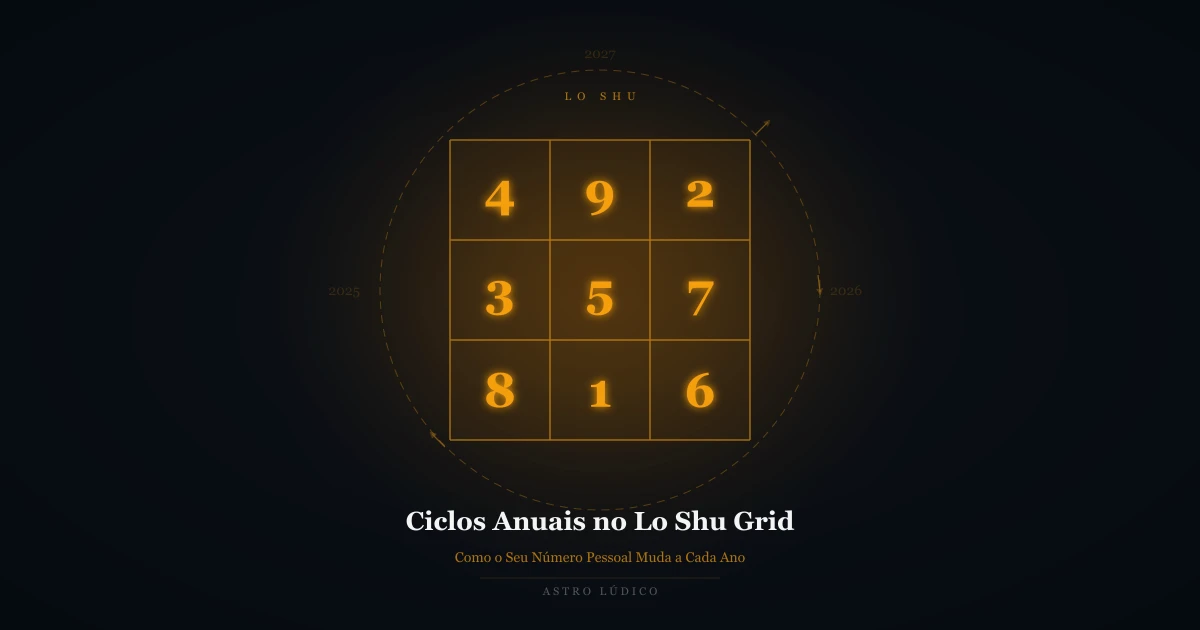
Annual Cycles in the Lo Shu Grid
Discover how your Personal Year Number changes every year and how each of the nine cycles shapes your decisions, relationships, and personal growth.

Name Vibration in Numerology: A Symbolic Guide to Patterns
Learn how numerological traditions associate letters and numbers with symbolic patterns, while keeping personal choices and lived experience at the center.
Cabalistic Numerology: A Complete Guide to the Soul's Numerical Map
Understand how Cabalistic Numerology reads names, birth dates, and spiritual lessons through the 22 vibrations that shape a person's journey.